We’ve all experienced it. You spend an hour deep-cleaning the bathroom, scrubbing tile grout until your shoulders ache. You step back feeling accomplished, only to have the light hit the shower enclosure and reveal it: that stubborn, cloudy, white “foggy” film that refuses to budge.
⚡ Direct Answer: How to Remove Hard Water Stains from Shower Glass Without Scrubbing
To remove stubborn hard water stains and mineral scale from shower glass without abrasive scrubbing, use the Acid-Dwell Technique: Apply an organic acidic paste (such as 1:1 citric acid powder and warm water, or a non-toxic paste like Bio-Clean) evenly across the dry glass. Let it dwell undisturbed for 15 minutes. The mild acid breaks down alkaline calcium and magnesium mineral bonds on a molecular level. Then, simply rinse with warm water and glide a professional squeegee down the glass for a streak-free, crystal-clear finish.
As a parent, I understand how disheartening it feels when surfaces never look truly clean despite strenuous effort. Those chalky white spots aren’t ordinary soap scum; they are mineral skeletons (calcium and magnesium carbonate) that have chemically bonded into the microscopic pores of your glass. Regular glass cleaners cannot dissolve chemical bonds. We don’t need more elbow grease; we need smart chemistry.
Proactive Prevention Tip: Once your glass is crystal clear, don’t let hard minerals re-bond. Compare the two top hydrophobic sealants in our complete breakdown of EnduroShield vs Rain-X shower door coatings to keep water beading effortlessly for months.
What If Vinegar Fails? If mineral hazing remains after vinegar dwell time, your glass has suffered permanent subsurface corrosion. Follow our step-by-step restoration guide on how to remove etched hard water spots from glass using cerium oxide polishing.
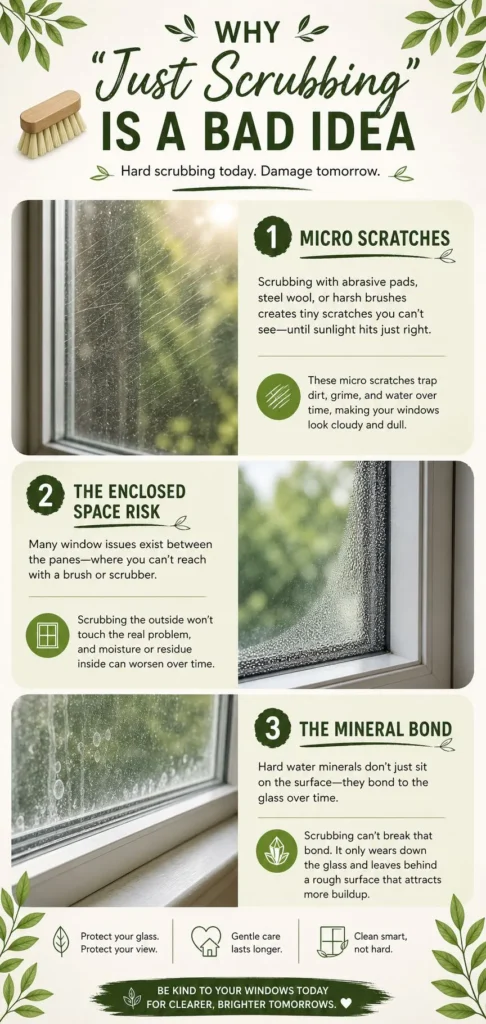
Why Abrasive Scrubbing Permanently Damages Glass
When faced with cloudy glass, many homeowners instinctively reach for green abrasive scouring pads or coarse powders. Here is why that approach backfires:
- Permanent Micro-Scratches: Tempered glass is harder than common glass but highly susceptible to scratch abrasion. Coarse scouring pads etch micro-grooves that trap mineral deposits deeper, making glass cloud over twice as quickly next time.
- Toxic Fume Hazards: Industrial bathroom descalers emit harsh fumes. In a confined shower stall with minimal airflow, inhaling these chemical vapors poses a serious respiratory risk.
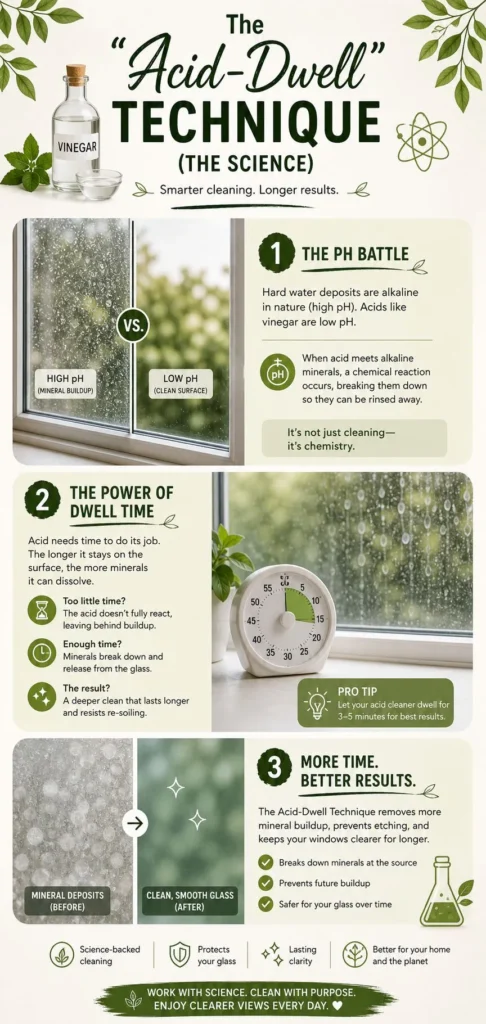
- The Chemistry of Mineral Bonds: Hard water deposits are alkaline (high pH). They require safe, low-pH organic acids to dissolve them cleanly without mechanical force.
The Science of “Acid-Dwell”
In nutrition science, enzymes require specific contact time to break down molecular bonds. The exact same principle applies to cleaning mineral scale: you must allow your cleaning agent sufficient dwell time to dissolve calcium and magnesium carbonate.
Recommended Gear: The No-Scrub Shower Kit
Bio-Clean Professional Hard Water Stain Remover
An eco-friendly, non-toxic commercial paste that safely dissolves years of baked-on mineral deposits, limescale, and rust without harsh acid fumes. Safe on septic systems and completely scratch-free on tempered shower glass.
- Non-Abrasive: Micro-fine jewelers polishing agents dissolve bonds without scratching glass.
- Long-Lasting: A single bottle covers multiple shower doors and tile enclosures.
Unger ErgoTec Ninja Professional Squeegee
Keep this squeegee inside the shower. A 10-second pass after every shower removes water droplets before minerals can precipitate out and bond to the glass.
- Streak-Free: Professional dual-sided rubber blade provides a 100% dry, clear finish in one pull.
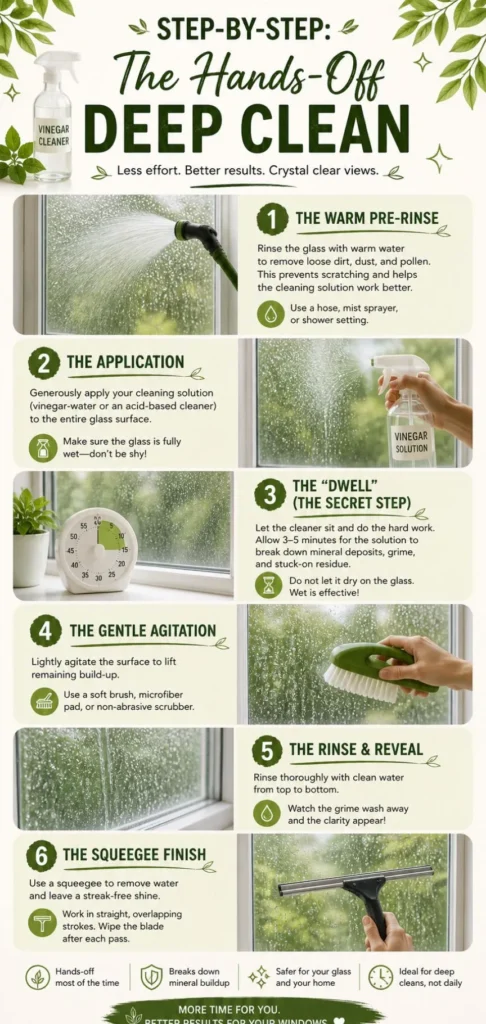
Step-by-Step: The Hands-Off Deep Clean
- Warm Pre-Rinse: Run hot water over the glass for 60 seconds to open microscopic glass pores and soften surface soap scum.
- Even Application: Apply a thin coat of Bio-Clean or homemade citric acid paste using a damp microfiber cloth, ensuring full coverage over mineral spots.
- The 15-Minute Dwell: Step away and let the formula work. The organic acids will metabolize the calcium bonds without scrubbing.
- Light Agitation: Gently wipe with a damp, soft sponge. You will feel that the rough mineral grit has dissolved completely.
- Rinse & Reveal: Rinse thoroughly with warm water.
- Squeegee Dry: Immediately glide your squeegee top-to-bottom. Never let rinse water air-dry on the surface.
The 10-Second Maintenance Rule
Preventing hard water stains requires less than 15 seconds after each shower. Hang a squeegee on the shower wall and wipe the glass immediately after shutting off the water. For more whole-home window care, explore our guides:
Related Clean Glass Resources:
- Struggling with cloudy window glass? Read What Foggy Glass Means for Your Home’s Health.
- Comparing glass cleaning gear? Read Window Vacuum vs Squeegee: Which Is Better for Homeowners?
- Keep high glass clean from the ground: How to Clean High Exterior Windows Without a Ladder.
Pingback: Robotic Window Cleaner for High Windows Review (Safety & Reach Tested)