Stand inside any modern home staring at a grime-coated second-story window, and a simple architectural question immediately determines whether cleaning takes five minutes or requires dragging out a 24-foot extension ladder: do single-hung windows tilt in for cleaning?
Unlike double-hung windows—where both top and bottom panels glide independently and fold easily indoors—single-hung windows feature a fundamentally different mechanical architecture. Pulling forcefully on the wrong rail or prying against fixed vinyl stops can snap side balance clips or shatter seals. In this guide, we answer which single-hung models actually tilt, how to spot fixed brand exceptions (like the Andersen 100 Series), and exactly how to wash that stubborn upper exterior pane from inside your room.
💡 Direct Answer: Do Single Hung Windows Tilt In for Cleaning?
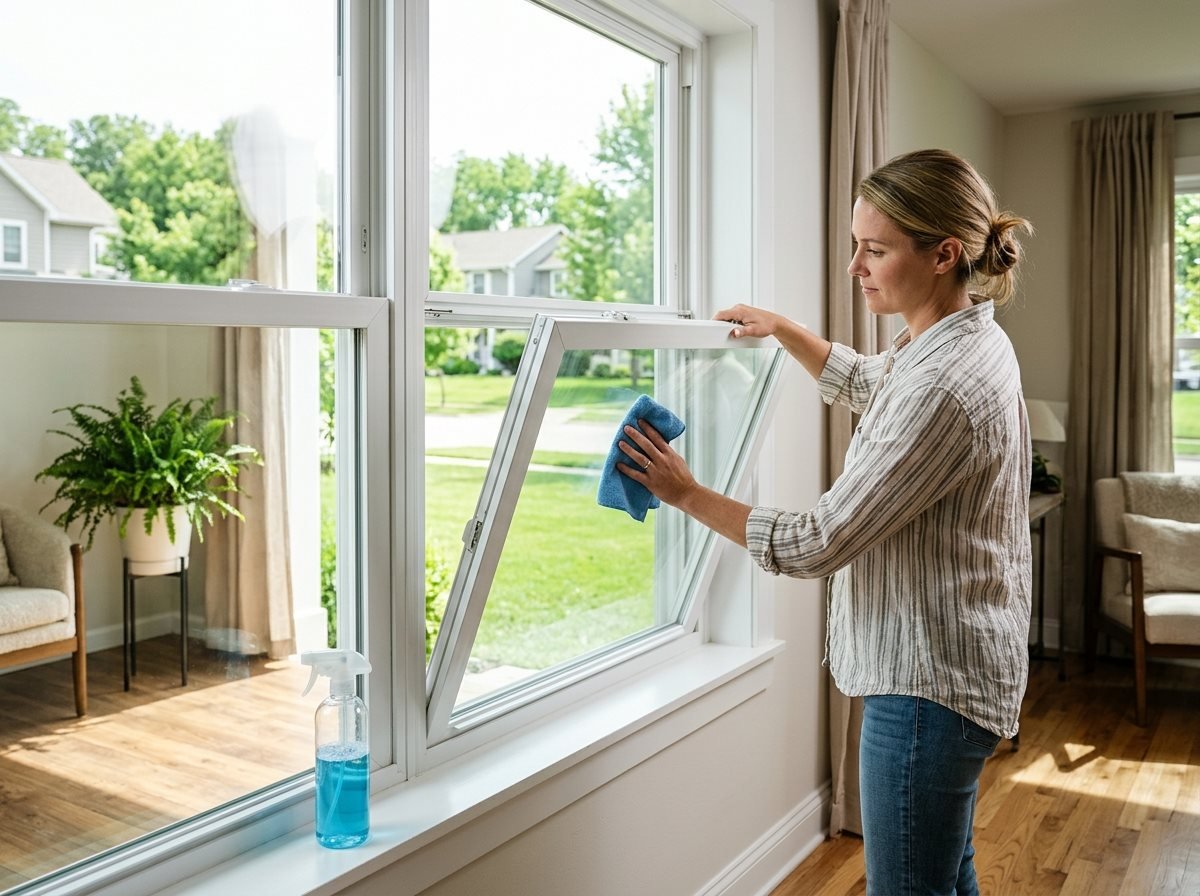
Yes—on most modern vinyl single-hung windows, the movable bottom sash tilts inward for cleaning, but the upper glass sash is permanently fixed and never moves or tilts.
Quick Identification Breakdown:
- Modern Tilt-In Single-Hung (Vinyl / Clad): Look at the top rail of the lower sash for two recessed sliding thumb tabs (tilt latches). Raise the bottom sash 4 inches, pinch both tabs inward, and tilt the lower pane inside.
- Non-Tilt Single-Hung (Andersen 100 Series, Aluminum, Older Wood): No tilt latches exist. Neither sash hinges inward; the bottom sash either slides up/lifts out via side release clips or must be cleaned from outdoors.
- Cleaning the Fixed Upper Pane: Remove the bottom half-screen, reach upward through the open lower frame with a curved U-shaped gooseneck squeegee, use a tethered magnetic cleaner, or spray from outside with a telescopic pole.
Not sure if both sashes on your window actually slide up and down? Check our companion walkthrough on how to clean double hung windows from the inside if both upper and lower rails move on tracks.
Single-Hung vs. Double-Hung vs. Fixed Aluminum: Quick Comparison
Check your window’s mechanical construction against the chart below before unlocking or pushing on any frame latches:
| Window Style | Bottom Sash Action | Top Sash Action | Visible Indicator | Best Exterior Cleaning Strategy |
|---|---|---|---|---|
| Modern Tilt Single-Hung | Slides Up & Tilts Inward | Fixed Permanently | 2 sliding thumb latches on top corners of lower sash | Tilt bottom sash indoors; reach upper exterior through open lower frame |
| Non-Tilt Single-Hung (e.g., Andersen 100) | Slides Up (Removable Lift-Out) | Fixed Permanently | Smooth top rail (ZERO tilt latches); side sash release clips | Detach take-out clips for lift-out, or use U-wand / magnetic cleaner |
| Builder Aluminum Single-Hung | Slides Up (Does Not Tilt) | Fixed Permanently | Slim metal jambs, spiral rod or block-tackle balances | Telescopic extension pole outside or curved U-squeegee from indoors |
| Tilt-In Double-Hung | Slides & Tilts Inward | Slides & Tilts Inward | Twin tilt latches on BOTH bottom and upper sash rails | 100% indoor cleaning without any ladder or poles |
The 5-Second Tilt Check: Don’t Pry Until You Spot These Latches
Before trying to pull your single-hung sash into your bedroom, take five seconds to perform this hardware audit:
- Inspect the Top Edge of the Bottom Sash: Unlock the main center cam lock and look along the flat top rail right next to the left and right vertical edges. If you see two recessed rectangular plastic tabs (approx. 1 inch long) designed to slide inward toward the center lock, you have a tilt-in single-hung window.
- Examine the Vertical Jamb Tracks: Modern tilt-in windows glide inside slightly flexible spring-loaded vinyl jamb liners with visible pivot slots. If the jamb track is rigid painted wood, extruded aluminum, or smooth composite Fibrex with zero sliding tilt tabs, never pry the sash inward—you will snap the retaining shoe brackets inside the wall!
Important Brand Exception: Andersen 100 Series & Pella Builders
For an exact series breakdown and safe interior cleaning protocols for both tilt and non-tilt units, explore our step-by-step tutorial on how to clean Andersen windows from the inside.
One of the most common homeowner surprises occurs with popular composite frames like the Andersen 100 Series Single-Hung window. Even when purchased brand-new in 2025 or 2026, Andersen 100 Series single-hung windows do not tilt inward.
Why? To preserve rigid structural strength and slim sightlines with their Fibrex composite material, the bottom sash travels vertically in fixed side jambs without pivoting hinges. To access the exterior bottom glass from indoors on non-tilting single-hung units, you must release the side sash take-out clips (or unhook the side jamb stop cover) and lift the sash completely free of the frame—or leave it latched and follow our dedicated protocol on how to clean windows that don’t tilt from the inside.
Step-by-Step: Cleaning Tilt-In Single-Hung Windows (Bottom & Top)
Follow this exact sequence to clean both glass units without damaging window balances or losing balance shoes up inside the frame:
Phase 1: Remove the Exterior Half-Screen Safely
Most single-hung windows carry a half-size insect screen mounted solely over the bottom opening. You cannot safely wash the fixed upper exterior glass with a screen blocking your reach.
- Raise the bottom glass sash halfway up.
- Locate the screen’s tension springs along one vertical edge (or dual pull-tabs along the bottom inside rail).
- Compress the spring side inward, angle the opposite side cleanly inward through the open sash hole, and set the screen aside—or give it a gentle brush using our no-mess screen cleaning method.
Phase 2: Raise Bottom Sash 4 Inches & Release Twin Tilt Latches
Crucial Mechanics Tip: Never try tilting a window sash straight down on the bottom wooden sill. Leaving the sash raised roughly 4 to 6 inches clears the bottom sill weatherstripping and stops steel pivot bars from gouging vinyl corners.
- Slide both left and right thumb latches simultaneously inward toward the middle of the sash.
- Hold both rails firmly and tilt the top of the bottom sash smoothly toward your torso.
- Support the horizontal sash safely with one hand—or rest its outer edge onto a sturdy chair back stacked with a towel. Never let a tilted sash hang unsupported at a downward slope below 90 degrees! Hanging weight strips pivot bars straight out of internal coil balance locks.
- Wipe the exterior glass surface clean using mild soapy water and a dry squeegee or waffle microfiber towel.
Phase 3: How to Wash the Fixed Top Exterior Pane Without a Ladder
This is where most homeowners get stuck: your lower half is sparkling clean, yet the upper fixed pane remains completely covered in spider webs and rainwater streaks. Choose whichever safe method matches your floor height:
- The Ground-Floor Exterior Telescopic Pole: If the window sits on the first floor (or reachable second floor from lawn level), leave the screen off, step outside, and wash the fixed upper window smoothly with a telescopic window cleaning pole or pure deionized water-fed brush.
- The Indoor Gooseneck U-Shaped Wand (For Upper Apartments): Re-engage the bottom sash upright cleanly (still open fully to its highest stop). With the screen out, extend a curved U-shaped gooseneck window scrubber/squeegee out through the lower gap and sweep up onto the fixed top pane while looking right through the upper glass! Read more in our guide on cleaning high apartment exterior windows from inside.
- Tethered Double-Sided Magnetic Cleaner: On thick double-pane upper glass where arms can’t reach around, clip the interior/exterior magnet pads directly onto the fixed top glass (always wrapping the nylon safety tether securely around your wrist!) as detailed in our magnetic window cleaner guide.
Phase 4: Re-Seat the Tilted Sash & Confirm Twin Latch Clicks
When closing up, lift the bottom sash smoothly upright until it meets the vertical jamb pocket squarely. Listen carefully for a sharp, crisp double “CLICK” on both the left and right top latches snapping into the vertical jamb walls. Gently test both upper corners by pulling lightly inward; neither corner should budge before you slide the sash back down to lock.
Troubleshooting: What If a Balance Shoe Pops Loose Inside the Track?
Occasionally, when tilting a stiff single-hung bottom sash out of the frame, one of the internal spring-loaded metal pivot bars pops out of the white nylon balance shoe riding inside the vertical jamb track—causing the heavy coil spring shoe to shoot straight up into the upper jamb or jam crookedly.
Do not try to yank the sash down! Slide a stout #2 flathead screwdriver horizontally into the U-shaped slot of the stuck nylon balance shoe, press firmly downward while twisting the slot upright (horizontal slot locks the shoe brake in place cleanly against the vinyl wall), and drop the steel bottom pivot pin straight back down inside the open cam channel before resetting the sash upright.
Frequently Asked Questions (FAQ)
Why does only the bottom half of my single-hung window move?
By definition, a single-hung window consists of one fixed stationary upper glass unit sealed directly into the main outer window frame and one movable lower sash. Moving to a single operational sash cuts manufacturing costs by 15%–25% and creates fewer perimeter air-leak seals, which is why builders heavily favor single-hung frames in new residential construction.
Can you reach the outside of a fixed top pane from inside a single-hung window?
Bare hands usually cannot reach high enough safely out the open bottom frame to clean the entire upper exterior pane without dangerously leaning out the opening. Instead, remove the bottom screen and use a telescoping curved U-shaped window squeegee pole (which reaches easily upward through the open bottom opening from safe inside footing) or a magnetic washer with safety lanyard.
Are my single-hung window tilt latches supposed to be hard to slide?
They should release under moderate thumb pressure. If latches feel frozen, dried dust or heavy acrylic wall paint may have dripped into the spring pocket. Vacuum out the top rail slot first, trace gently around paint bridges with a utility blade (see unsticking windows painted shut), and give each plastic slide latch a micro-burst of Dry PTFE spray.
Can I convert my non-tilting single-hung window into a tilt-in window?
No—you cannot retrofit tilt latches onto an existing non-tilt window sash because the jamb extrusion channels lack recessed balance pockets and pivot shoes. However, window contractors can drop brand-new double-hung tilt-in replacement sash inserts seamlessly inside your existing wood trim frames during a half-day window retrofit.