You just finished cleaning your windows until they sparkle. You step back to enjoy the view, but everything still looks fuzzy and grey. You look closer and see the culprit: your window screens are caked in thick dust, pollen, and soot.
⚡ Direct Answer: How to Clean Window Screens Without Removing Them
To clean window screens in-frame without popping them out, follow the 3-step dry extraction method: First, vacuum the mesh using a soft brush attachment on low suction to dislodge charged dust and pollen. Next, mist a microfiber screen-roller tool or lint-roller with a 1:1 warm water and distilled vinegar solution (do not saturate). Finally, wipe in vertical overlapping passes from top to bottom, catching dissolved dirt on a microfiber towel placed in the bottom sill.
Most homeowners dread this chore. The thought of popping out twelve stubborn screens, carrying them out to the driveway, scrubbing them with a hose, and wrestling them back into the frames is a total weekend-ruiner. But you don’t have to choose between back-breaking labor and dirty views. I use an “In-Frame No-Remove” strategy that yields sparkling results while your screens stay locked safely in place.
Drainage Check: Dust washed off exterior screens flows directly into the lower sill track. Ensure screen runoff drains out smoothly by checking our guide on how to clean weep holes in vinyl windows.
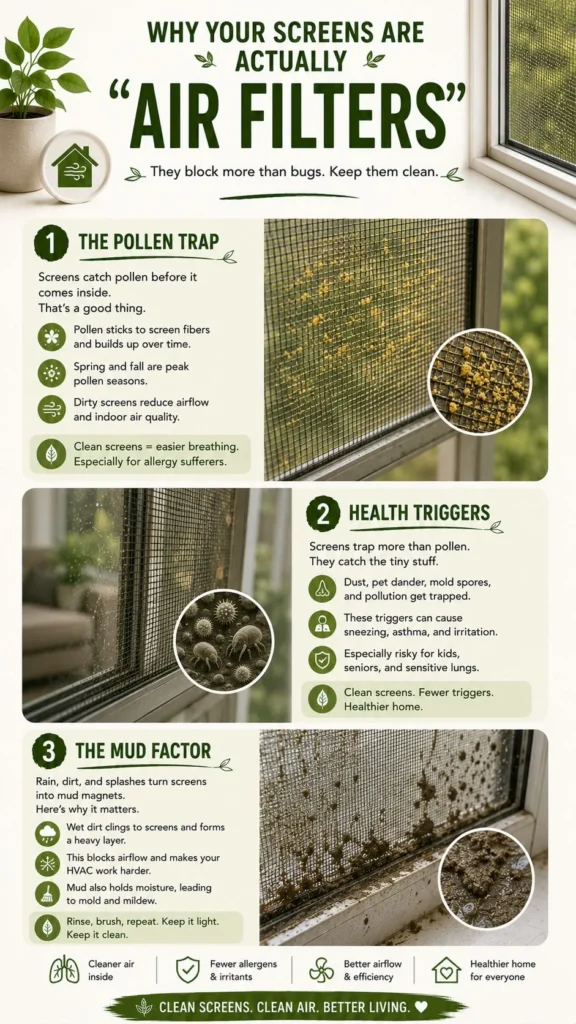
Why Your Window Screens Are Actually “Indoor Air Filters”
In my work focusing on nutrition and family wellness, I evaluate everything that enters the human body. We filter our drinking water and choose organic groceries, yet we frequently overlook the quality of the ambient air circulating through our bedrooms.
Think of your window screens as the primary mechanical filters for your household. Every time you open a window to welcome a fresh breeze, that outdoor air passes directly through the screen mesh:
- The Pollen & Allergen Sieve: Dirty screens do not let in “fresh air.” They act as high-friction nets that capture tree pollen, ragweed, and road dust, which then blow into your living areas with every gust.
- The Mud Mist Reaction: When sudden rain showers hit dusty screens, the water emulsifies the dust into dirty liquid mud. This drips into your track assemblies, generating the mold and bacteria colonies we address in our Window Track Cleaning Guide.
- Insect & Spider Harbor: Grimy screens attract gnats and midges, creating an abundant feeding ground for spiders. To keep spiders from nesting in your frame channels, explore our guide on Keeping Spiders Out of Window Tracks.
The Science: Why Garden Hoses Ruin In-Place Screens
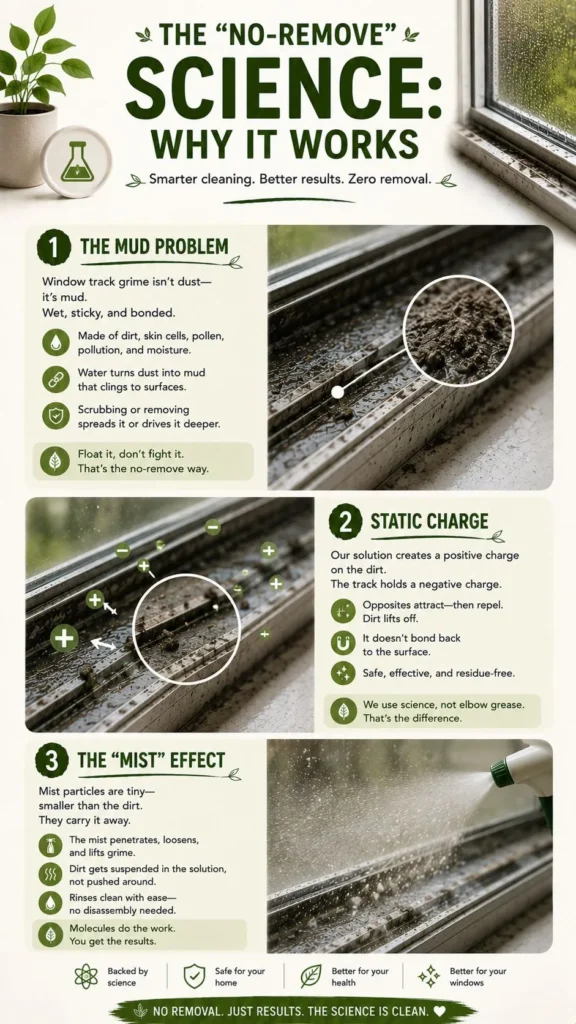
When people see dirty screens, their first instinct is to spray them with a high-pressure hose nozzle. However, when screens remain installed in your window casing, spraying water causes three immediate failures:
- The Mud Dam Effect: High-pressure water instantly transforms dry pollen and dirt into liquid mud, driving it deep into window weeping holes and drywall cavities.
- Electrostatic Bonding: Dust particles carry a mild electrostatic charge adhering them to nylon or fiberglass mesh. High-volume water cements this bond unless a dry vacuum first breaks the static barrier.
- Indoor Blowback: Spraying through screens creates a dirty aerosol vapor that penetrates weatherstripping, landing on curtains, furniture, and baseboards.
Recommended Gear: The In-Frame Cleaning Kit
Having the proper tools makes this a 10-minute job rather than an all-day weekend ordeal. Here is what I keep in my home cleaning caddy:
2-in-1 Multifunctional Window & Screen Cleaning Squeegee Brush
Features a specialized dual-sided head with a high-density microfiber screen duster on one side and a silicone squeegee on the other. It penetrates fine mesh grids without stretching or tearing screen splines.
- Extendable Handle: Clean upper screen sections from floor level without ladder climbing.
- Washable Pad: Reusable microfiber pad captures pollen instead of dispersing it into room air.
Step-by-Step: The In-Frame Cleaning Protocol
- Protect the Bottom Sill: Place an old microfiber towel along the bottom track channel to catch any stray debris or moisture runs.
- Dry Vacuum Pass: Attach the soft bristle brush attachment to your vacuum cleaner. Starting from the top, run the brush lightly in horizontal passes across the mesh. Do not press hard against the screen to prevent popping the spline out of the groove.
- Prepare the Non-Toxic Solution: Mix 1 part distilled white vinegar with 2 parts warm distilled water in a spray bottle. Add 2 drops of eco-friendly dish soap to break surface tension.
- Dampen, Don’t Soak: Mist your screen-cleaning brush or microfiber pad directly with the spray bottle. Never spray the screen directly.
- Vertical Top-to-Bottom Wipe: Glide the dampened pad down the screen using overlapping strokes. The microfiber flushes embedded dust out of the micro-grid.
- Dry Sill Wipe: Pick up your towel from the sill, wipe the lower frame clean, and let the screen air-dry with windows cracked for 10 minutes.
Maintaining Clean Screens & Clear Air
Cleaning your screens twice a year (early spring before pollen season and late autumn before closing windows for winter) reduces household allergens significantly. If your windows are also dealing with condensation or hard water issues, continue with our related cleaning blueprints:
Pingback: How to Clean High Exterior Windows Without a Ladder (Safe Guide)