Introduction: The Morning Mystery
You wake up, pull back the curtains to let in the morning sun, but you can’t see a thing. Instead of a clear view, your windows are covered in a thick, cloudy mist. In the cleaning world, we call these “Crying Windows.”
As a mom, your first thought is probably the “Repair Bill.” You wonder if the seal is broken or if you need to spend thousands on new glass. But as a dietician, my first thought is actually about the air your family is breathing.
Foggy windows are rarely just a cosmetic problem; they are a “check engine light” for your home’s health. Today, I’m going to show you how to diagnose the mystery of foggy glass and what you can do to protect your home and your health.
What “Crying Windows” Tell Us About Health
When your windows “cry,” they are telling you that your indoor humidity is too high. In my dietician practice, I often focus on internal health, but our environment plays a massive role in how we feel. High moisture levels in the air aren’t just uncomfortable—they are a health risk.
- The Mold Trigger: When warm, moist air hits cold glass, it turns into water. That water drips down into your window tracks, creating a perfect breeding ground for black mold.
- Respiratory Health: Excess humidity is the #1 friend of dust mites. If your children have allergies or asthma, foggy windows are a sign that the air in their bedroom might be making their symptoms worse.
- The “Healthy Home” Balance: Ideally, your home should stay between 30% and 50% humidity. Anything higher, and you aren’t just growing fog on your windows; you’re growing bacteria in your walls.

Mom’s Tools for a Healthy “Dry” Home
To stop the fog, you first need to measure it. I recommend every health-conscious parent keeps a Hygrometer in the house.
The AcuRite Digital Hygrometer is a tiny, budget-friendly tool that tells you exactly how much moisture is in your air. I keep one in the kids’ bedroom. If I see the number go above 50%, I know it’s time to turn on the dehumidifier or crack a window to prevent mold before it starts.
If your windows are already “crying,” don’t let that water sit and rot your frames. The Karcher WV 1 Window Vac is the fastest way to remove condensation. Instead of using a pile of soggy towels, this vacuum sucks up the water instantly, leaving the glass dry and the sills safe from rot.
The 2-Minute Fingerprint Test
Before you call a window contractor, you need to know where the moisture is hiding. Most “fog” is actually just surface condensation that you can fix for free. Use my Fingerprint Test to find the source in seconds:
- The Outside Wipe: Rub your finger on the outside of the glass. If the fog clears, it’s just the morning dew or humidity. This is common in the summer and is nothing to worry about.
- The Inside Wipe: Rub your finger on the inside of the glass. If it clears, your indoor humidity is too high. This is the “Health Warning” I mentioned—it means your house needs better airflow to prevent mold.
- The “Phantom” Fog: If you rub both sides and the fog doesn’t move, the moisture is trapped between the panes. This means the factory seal has “blown.” While this doesn’t usually cause mold inside your home, it does mean your window has lost its insulation power.

3 Simple Fixes to Stop the “Cry” Today
If your test showed that the moisture is on the inside of your glass, don’t panic. You don’t need new windows; you just need to manage your home’s “breath.” Here are three ways to dry things out:
- Boost the Airflow: This is the easiest fix. Turn on your kitchen and bathroom exhaust fans whenever you are cooking or showering. Even cracking a window for 10 minutes a day can flush out the “heavy” moist air that causes fog.
- The Dehumidifier Strategy: If your hygrometer shows a reading consistently above 50%, your home needs help. Placing a small dehumidifier in “wet” zones (like basements or laundry rooms) will stop the windows from sweating in the bedrooms.
- Clear the Obstacles: Sometimes, heavy blackout curtains trap cold air against the glass, which creates condensation. During the day, keep your curtains open to let the glass warm up and the air circulate.

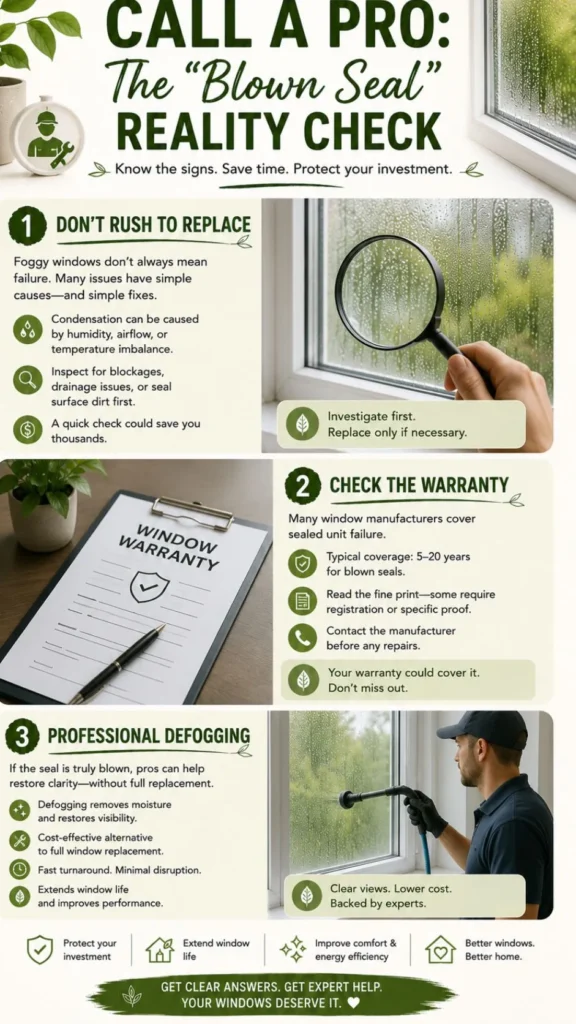
When to Call a Pro: The “Blown Seal” Reality Check
As much as we love a good DIY hack, some things are beyond a squeegee or a dehumidifier. If your Fingerprint Test showed that the fog is trapped inside the double panes, your window’s factory seal has failed.
Here is how to handle a blown seal:
- Don’t Rush to Replace: A foggy seal usually means you’ve lost some insulation (energy efficiency), but it isn’t an emergency. You can often wait until your budget allows for a replacement.
- Check the Warranty: Many high-quality US window brands have 10–20 year warranties. Before you pay out of pocket, check the bottom corner of your glass for a manufacturer’s stamp.
- Professional Defogging: In some cases, a specialist can drill a tiny hole to “vent” the moisture out without replacing the whole window. This is a great “budget-friendly” middle ground.
Conclusion: Clarity for Your Home and Health
Seeing a cloudy mess on your windows every morning can be frustrating, but remember: your windows are just acting as a messenger. They are telling you about the air quality and humidity inside your sanctuary.
By monitoring your home’s “vitals” with a hygrometer and managing moisture with a window vacuum, you aren’t just clearing the view—you’re protecting your family from mold and allergens.
A dry home is a healthy home. Now that you’ve solved the mystery of the fog, make sure you aren’t ignoring the “other” hidden dirt. Head over to my No-Remove Screen Cleaning Guide to make sure the air coming through those windows is as fresh as can be!