You wake up, pull back the curtains to let in the morning sun, but you can’t see a thing. Instead of a clear view, your windows are covered in a thick, cloudy mist. In the cleaning world, we call these “Crying Windows.”
⚡ Direct Answer: Why Do Windows Get Foggy & Is It Dangerous?
Window condensation occurs when warm, moisture-laden indoor air contacts cold glass surfaces. While exterior fog is harmless dew, recurring interior glass condensation indicates indoor relative humidity exceeding 50%—a primary catalyst for toxic black mold (Aspergillus) and dust mite proliferation in window sills. If condensation is trapped between double panes, the insulating gas seal has failed and requires glass replacement or defogging.
As a parent, your first thought is probably the repair bill—wondering if you need to spend thousands on new replacement glass. But with my professional background in nutrition and dietics, my primary concern is the air quality your family is breathing every single day.
Foggy windows are rarely just a cosmetic inconvenience; they are the “check-engine light” of your indoor living environment. Today, we’ll diagnose what is causing your foggy glass, run the 2-minute diagnostic fingerprint test, and implement safe fixes to protect your family’s health.
What “Crying Windows” Tell Us About Your Family’s Health
When your windows “cry,” they are warning you that indoor humidity levels have climbed into the hazard zone. While dietary health focuses on what goes into our bodies, environmental health governs the air entering our lungs. Elevated indoor moisture creates serious household risks:
- The Mold Trigger: As moisture condenses on cold glass, it rolls downward into your window sills and tracks. This stagnant puddle combines with ambient dust to form a breeding biofilm for Aspergillus and black mold spores.
- Respiratory & Allergy Irritation: Relative humidity above 50% accelerates dust mite colony reproduction by up to 200%. For children with asthma or seasonal allergies, waking up in a room with condensation often means waking up with congested airways and morning coughs.
- The Healthy Home Target (30%–50% RH): According to building health standards, optimal indoor humidity rests between 30% and 50%. Above 50%, moisture seeps into porous drywall and insulation.

Essential Tools for a Dry, Mold-Free Home
To eliminate window condensation permanently, you need to measure moisture accurately and remove existing condensation before it damages your wood frames or develops mold.
AcuRite Digital Hygrometer & Indoor Humidity Monitor
A precise, budget-friendly digital humidity gauge. Displays real-time relative humidity percentages so you know instantly when to turn on exhaust fans or dehumidifiers before condensation forms.
- Accuracy: High/low daily humidity records with rapid sensor refresh rate.
- Ideal Use: Keep one in children’s bedrooms and one in the primary bathroom.
Kärcher WV 1 Plus Cordless Window & Glass Vacuum
Instead of soaking through a stack of dirty towels that transfer mold back into your laundry, this battery-powered handheld vacuum sucks up morning condensation in seconds, depositing dirty water directly into an internal reservoir.
- Key Advantage: Streak-free extraction with zero dripping on baseboards or carpet.
- Multi-Use: Cleans mirrors, shower stalls, and sliding doors effortlessly.
The 2-Minute Fingerprint Test: Pinpoint the Exact Moisture Source
Before calling an expensive glass replacement contractor, take two minutes to run this simple diagnostic test. Glass condensation occurs on three different planes, each requiring a different solution:
- 1. The Exterior Wipe (Outside Pane): Run your finger along the outside surface of the window. If the fog clears, you are dealing with exterior atmospheric dew. This happens during temperature inversions when outdoor humidity is high and your interior is air-conditioned. It is a sign of high thermal efficiency and harmless.
- 2. The Interior Wipe (Inside Pane): If wiping the inside glass clears the moisture, your home’s indoor air is saturated with moisture. This is your cue to increase ventilation, run dehumidifiers, and check that bathroom exhaust vents are functioning.
- 3. The “Phantom” Fog (Between the Panes): If you wipe both interior and exterior glass and the fog cannot be touched, moisture is trapped hermetically between the double or triple panes. This confirms a blown thermal seal.

3 Simple Fixes to Stop Window Condensation Today
If your test confirmed that condensation is forming on the interior glass, you don’t need new windows. You need to manage air circulation and indoor moisture output:
- Ventilate Daily: Run bathroom exhaust fans for 20 minutes following every shower. While cooking, always engage the stove range hood. Opening opposing windows for just 5 to 10 minutes creates a rapid cross-ventilation exchange that flushes out humid, heavy air.
- Deploy Targeted Dehumidification: If your hygrometer reads above 50% relative humidity, place a compact dehumidifier near moisture epicenters (laundry rooms, basements, or enclosed bedrooms).
- Open Window Coverings During Daylight: Heavy blackout curtains and tight thermal blinds create a cold air pocket against the windowpane, supercooling the glass and triggering heavy condensation. Open drapes in the morning to allow warm room air to circulate over the glass surface.

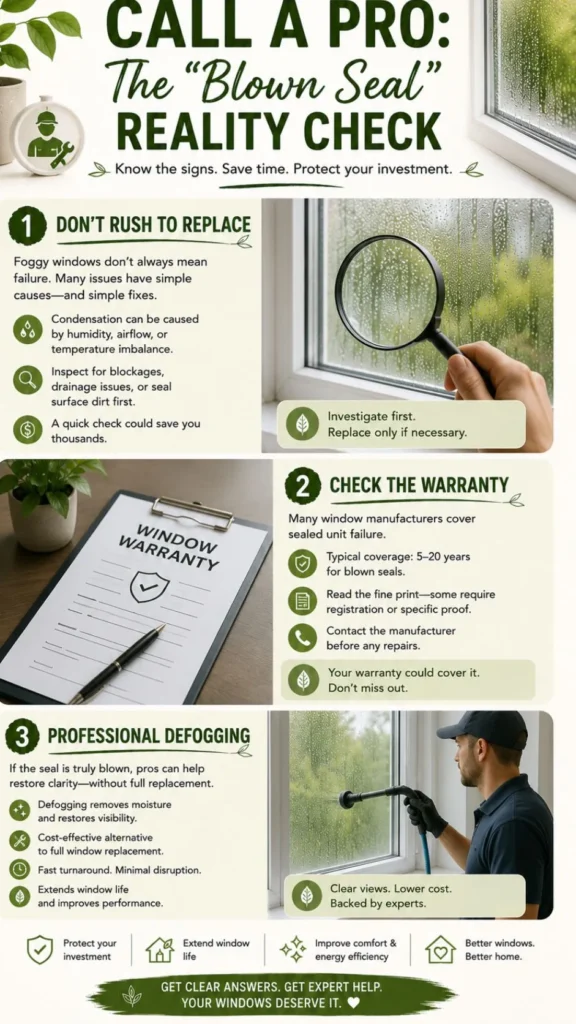
What to Do if You Have a Blown Window Seal
When the desiccant material inside double-pane glass becomes saturated, the seal fails and argon gas escapes. Here is the realistic course of action:
- Check Manufacturer Warranty: Most reputable window manufacturers (such as Andersen, Pella, and Marvin) provide 10- to 20-year glass seal warranties. Look for the etched stamp in the bottom corner of your glass to identify the manufacture date.
- Replace Only the IGU (Insulated Glass Unit): You do not need to replace the entire window frame or trim. A local glazier can replace just the glass sash at a fraction of full-frame replacement costs.
- Professional Defogging: Some specialty restoration companies drill tiny micro-holes to install one-way relief valves, venting moisture out without sash replacement.
Summary Checklist & Next Steps
Cloudy windows are a clear message about your indoor climate. By tracking humidity with a digital hygrometer and vacuuming surface moisture promptly, you protect your family from indoor allergens, rot, and mold spores.
Related Clean Home Guides:
- Keep the air entering your windows allergen-free with our No-Remove Window Screen Cleaning Guide.
- Prevent black mold buildup in sliding channels using our Step-by-Step Window Track Cleaning Guide.
- Deciding on cleaning gear? Read our comprehensive comparison: Window Vacuum vs Squeegee: Which Is Better?