We have all been there. You go to open your window to let in a crisp morning breeze, but you stop mid-motion. There, nestled tightly in the corner of the track, is a thick, sticky spider web or a crusty mud dauber nest. It is an instant “yuck” moment for any homeowner.
⚡ Direct Answer: How to Keep Spiders & Nests Out of Window Tracks Naturally
To keep spiders and insect nests out of window tracks without toxic chemicals: First, perform a dry extraction with a vacuum crevice tool to remove webs and egg sacs without smearing silk into frame pores. Next, wipe the channel with a 50/50 water and white vinegar solution to eliminate pheromone scent markers. Finally, create a natural deterrent barrier by misting the tracks weekly with a spray containing 15 drops of pure peppermint essential oil diluted in 1 cup of water and 1 teaspoon of gentle dish soap.
As a parent, you want your home to be a sanctuary, not an insect breeding ground. But grabbing a bottle of heavy commercial insecticide creates unnecessary indoor chemical exposure. Today, I’ll share my non-toxic protocol to pest-proof your window frames, keeping spiders outside where they belong while keeping your indoor air pristine.
Spider Nest Inspection: Spiders and mud wasps love building cocoons inside the exterior drainage baffles of your frame. Make sure to clear them using our step-by-step instructions on how to clean weep holes in vinyl windows so water flows freely.
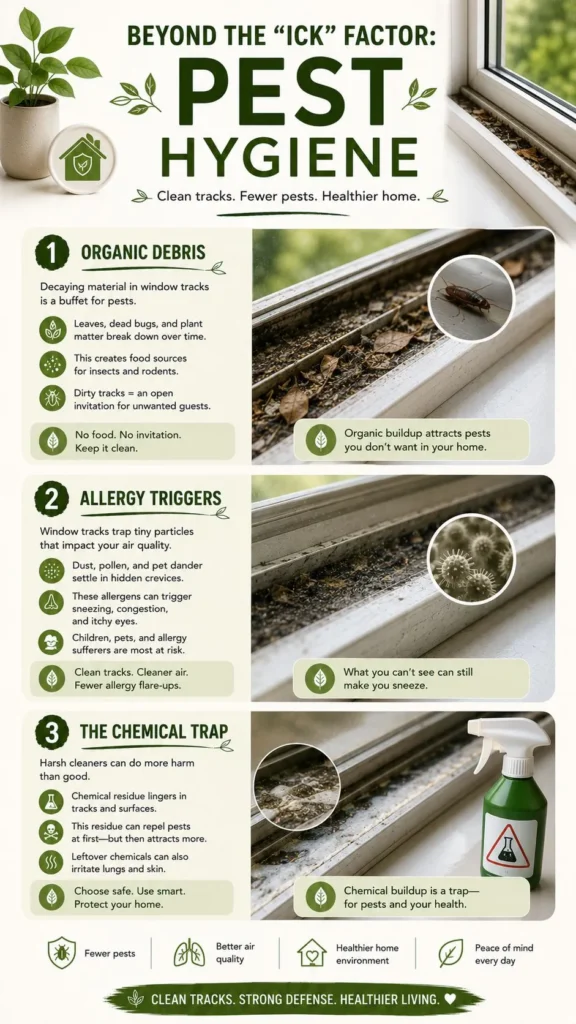
Beyond the “Ick” Factor: Pest Hygiene and Air Quality
In my professional background centered around nutrition and household wellness, I look beyond the eight creepy legs of a spider to examine the microbial hygiene of your home. When pests establish nests in window channels, they introduce several hidden hazards:
- Biological Debris: Spiders and wasps leave behind chitinous insect shells, droppings, and silk egg sacs. These desiccate into fine biological particulate that blows directly into bedrooms when windows are cracked open.
- Allergy & Asthma Aggravation: Biological insect remnants are recognized indoor allergens. For children with sensitive airways, this debris can trigger morning sneezing fits and nighttime coughing.
- The Chemical Trap: Conventional pesticide sprays contain synthetic pyrethroids or organophosphates. Applying these heavy toxins near window weatherstripping leads to indoor volatilization and chemical inhalation.
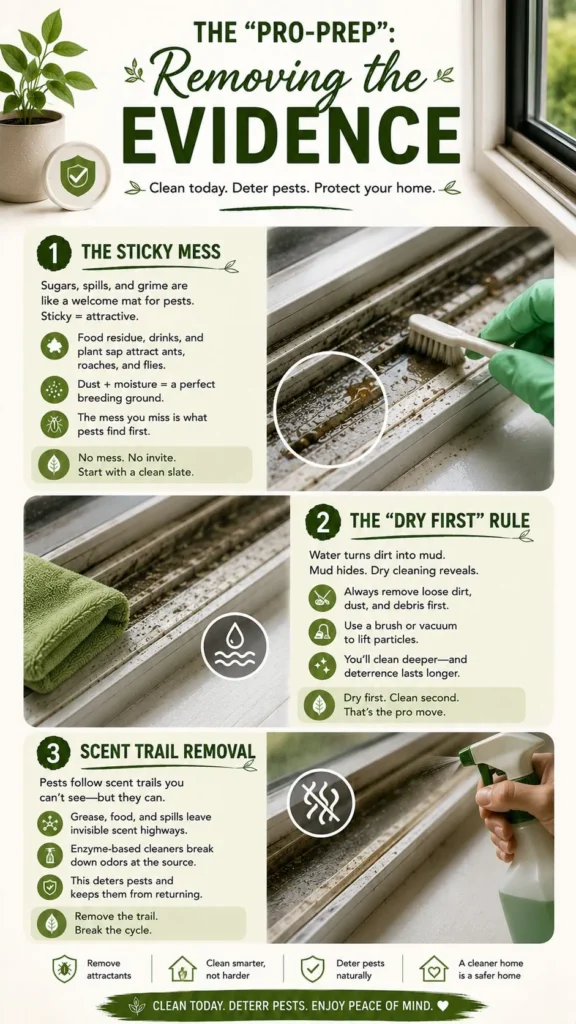
The “Pro-Prep”: The Golden Rule of Dry Removal
When encountering a sticky spider web or mud nest, never spray it with a garden hose or water bottle. Spider silk is an engineered, water-resistant protein fiber. Introducing moisture turns the web into an insoluble, gummy paste that adheres to vinyl and aluminum window channels, trapping dirt permanently.
- Dry Vacuum First: Always vacuum the track using a narrow crevice attachment. This extracts the physical web, living arachnids, and fragile egg sacs intact.
- Dry Stiff Brush Pass: For dried mud wasp nests, gently chip the casing free using a dry nylon track brush before introducing any moisture.
- Pheromone Neutralization: Once all dry solids are extracted, wipe the track with a cloth dampened with distilled white vinegar. The acetic acid dissolves the scent markers that attract future spiders to the same corner.
Natural Repellents: Safe for Children & Pets
Once your tracks are clean, natural essential oil barriers prevent pests from returning:
- Peppermint Oil Scent Barrier: Spiders possess chemoreceptors on their tarsi (legs). High-concentration menthol overstimulates their sensory organs, driving them away. Combine 15 drops of pure peppermint essential oil with 8 ounces of water and 1/2 teaspoon of mild dish soap (to emulsify). Mist window tracks and sill corners once weekly.
- Diatomaceous Earth (Food Grade): For ground-level sliding doors, dust a micro-fine line of food-grade diatomaceous earth into the outer track channel. It is completely non-toxic to mammals but acts as an abrasive barrier against crawling insects.
- Citrus Peels: Rubbing fresh lemon or orange rinds along outdoor window sills leaves natural d-limonene, an aroma spiders actively avoid.
Recommended Pest-Defense Tools
Mighty Mint Pure Peppermint Spider & Pest Repellent Spray
A pre-mixed, high-potency natural peppermint oil spray made with 100% natural Northwest peppermint. Ready-to-use without mixing, safe around kids and pets, and exceptionally effective for window perimeters.
- Safety: No synthetic chemicals, DEET, or harsh odors. Leaves a crisp mint fragrance.
- Application: Spray directly into exterior track channels and screen corners.
Complete Your Clean Window Routine
Keep your home’s air buffer healthy and sparkling with our companion guides:
Related Clean Home Guides:
- Need to remove years of black gunk? Read our 5-Minute Window Track Fizz & Scrub Method.
- Keep pollen and dust off your glass with the No-Remove Window Screen Cleaning Guide.
- Wondering about equipment? Check out our review: Window Vacuum vs Squeegee: Which Is Better for Homeowners?