⚡ Direct Answer: How to Get Dog Hair Out of Sliding Door Tracks
To remove dog hair from sliding door tracks without creating a sticky paste, always perform a 100% dry mechanical extraction first: scrape loose fur into clumps using a damp rubber glove or silicone squeegee, vacuum using a crevice tool, and hook wound hair out of lower roller axles with a wire pick. Dislodge dried grit with baking soda and vinegar foam, wipe clean with microfiber, and finish with a pet-safe dry PTFE lubricant spray (never oily grease or WD-40 multi-use, which act as hair magnets).
If you share your home with a Golden Retriever, German Shepherd, Husky, or any shedding four-legged family member, you know the daily patio door struggle. Every time your dog sprints into the backyard to chase a squirrel, a miniature fur tsunami settles straight into the threshold.
Over weeks and months, that shedding fur mixes with outdoor garden dust, damp morning condensation, and grit. Suddenly, your effortless gliding glass patio door begins to shudder, grind like sandpaper, and feel like you are hauling a 200-pound boulder just to let the pup out.
Most homeowners make the costly mistake of grabbing a wet rag or dousing the tracks in standard oily lubricant. Within 48 hours, the door sticks worse than before. As a home wellness specialist and pet parent, I know that maintaining smooth sliding doors requires understanding the mechanics of pet fur and protecting curious paws from toxic chemical residue. Here is the ultimate step-by-step guide on how to get dog hair out of sliding door tracks safely and permanently.
Why Pet Hair Causes Catastrophic Sliding Door Sticking
Sliding glass doors weigh between 75 and 150 pounds. They glide smoothly because that entire weight balances on two tiny nylon or tandem steel roller wheels tucked inside the bottom frame rail, riding along a raised aluminum track ridge.
When dog hair enters this microscopic ecosystem, three destructive things happen:
- The Axle Wrap Effect: Dog hair has microscopic barbs (cuticles) that latch together. As the roller wheels spin, they scoop up loose hairs and wind them tightly around the central ball-bearing axle. Eventually, the wheel binds completely and stops spinning.
- The “Flat Spot” Drag: Once the roller locks up, you are no longer rolling the door—you are physically dragging a seized plastic wheel across an aluminum rail. This grinds flat spots onto the wheels and gouges deep grooves into your expensive door threshold.
- Felted Sludge Accumulation: Moisture from rain or indoor humidity causes dog dander and fine hairs to mat together into a felt-like barrier, wedging the door sash into the corner pockets.
🐾 Why Pet Safety Matters at the Door Threshold:
Dogs and cats step directly on sliding door tracks every single time they go outside. Animals frequently groom and lick their paws immediately after coming indoors. Using caustic chemical oven cleaners, toxic solvent degreasers, or petroleum grease on door tracks exposes your pets to chemical burns, paw irritation, and toxic ingestion. Every method in this guide is 100% non-toxic and pet-safe.
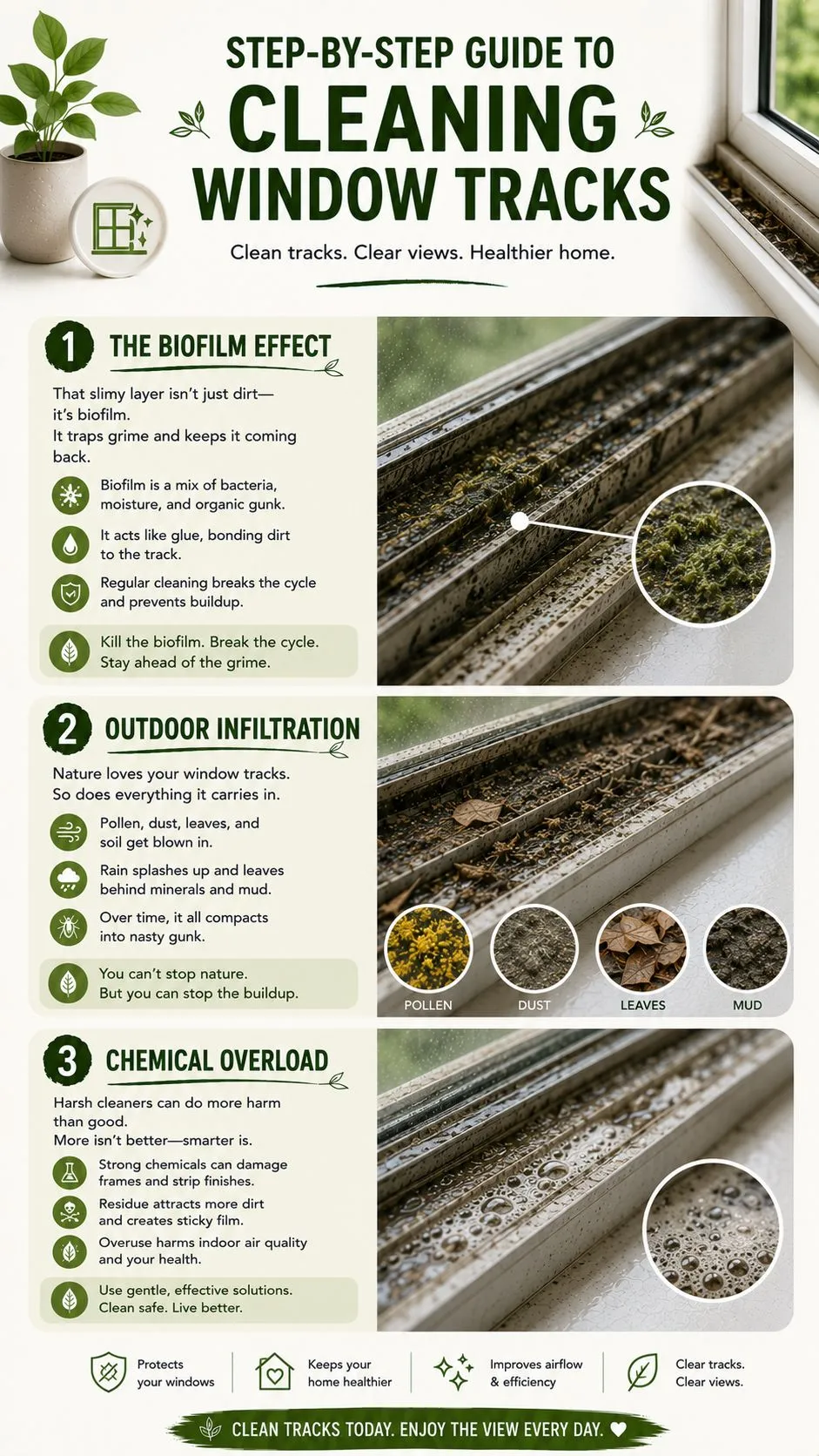
The #1 Mistake: Never Spray Water or Cleaner First!
When faced with a track full of grey dog hair and grime, the natural human instinct is to grab a multi-surface cleaner, douse the track, and wipe it with paper towels. Do not do this!
When dry pet hair gets wet, surface tension causes the strands to compress into a dense, soggy papier-mâché paste. Instead of lifting away, the wet fur cements itself into the tight 90-degree corners, drainage weep holes, and underneath the roller assemblies where vacuums can no longer reach. The golden rule of cleaning pet hair from tracks: Dry removal first, wet detailing second.
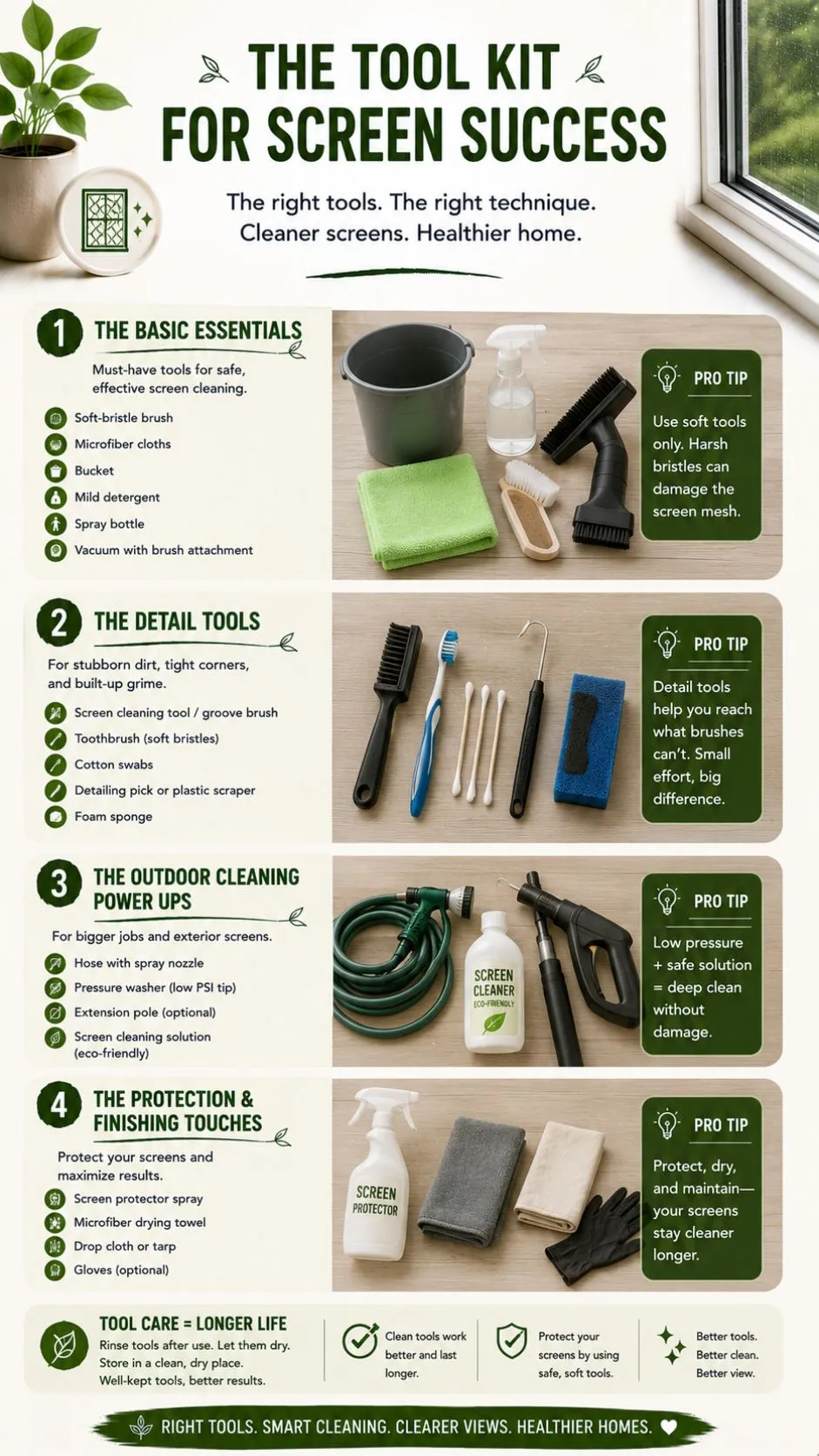
Pet-Safe Cleaning Toolkit Checklist
Before getting started, assemble these non-toxic, gentle cleaning tools:
🛠️ Pet Owner’s Track Cleaning Arsenal
- Electrostatic Rubber Pet Squeegee or Nitrile Gloves: Rubber creates natural static friction that pulls embedded pet fur out of tight aluminum channels like a magnet.
- Vacuum with Narrow Crevice Attachment: A powerful vacuum hose, paired with our cardboard flattening hack for ultra-tight gaps.
- Dental Pick, Bent Paperclip, or Zip-Tie: To de-tangle wound hair around the hidden roller axles.
- Stiff-Bristle Track Cleaning Brush: A specialized sliding door track crevice cleaning brush kit with narrow scraping tips.
- Rashmi’s Non-Toxic Track Lift: Baking soda (sodium bicarbonate) and distilled white vinegar (mild acid). Completely non-toxic, pet-safe, and odor-neutralizing.
- Non-Stick Dry Film PTFE Lubricant: Never use oily WD-40 or automotive grease! Use a WD-40 Specialist Dry Lube with PTFE spray that dries 100% tack-free so dog fur cannot stick to it.
- Absorbent Microfiber Cloths: To polish the track rails dry.
Step-by-Step: 5-Phase Dog Hair Deep Clean Protocol
Follow these five sequential phases to restore butter-smooth sliding action to your patio door in under 20 minutes.
Phase 1: The Dry Static “Fur Ball” Sweep
Start with completely dry tracks. Slide the heavy glass door all the way open to expose one half of the track.
- Put on a snug rubber dishwashing glove or grab a silicone pet hair blade.
- Firmly drag your gloved finger along the inner channel grooves from one end to the other. The rubber creates an electrostatic charge that rolls the wispy pet undercoat into tight, compact felt cigars.
- Repeat in the opposite corner groove. Pull out these large fur clumps by hand and toss them into the trash.
Phase 2: High-Velocity Crevice Vacuum Extraction
Now that the bulk clumps are out, bring in the vacuum to extract loose dried garden sand, fleas, dander, and remaining hairs.
- Attach your narrowest crevice wand. Run it directly along the track guide rails.
- Pro Pet Parent Hack: If your plastic vacuum attachment is too wide to fit into the recessed door track, slide an empty cardboard paper towel roll over the vacuum nozzle. Flatten the cardboard tip with your fingers until it forms a pencil-thin 1/4-inch slot. This creates intense concentrated suction that pulls hair straight out of the deepest track grooves!
- Slide the door to the opposite side and vacuum the other half of the track thoroughly.
Phase 3: The Roller Axle De-Tangling Pick
This is the secret step that 95% of guides omit! Look closely under the bottom edge of the sliding door sash where the roller wheels sit:
Take a dental pick, a stiff wire paperclip bent into a small hook, or a fine metal probe. Slip it gently beneath the door directly in front of and behind the roller wheel. Rotate the pick and draw it backward. You will be astonished at how much coiled, felted pet hair winds out from around the roller wheel bearing! Freeing the roller axle immediately allows the wheel to spin on its bearings again rather than skidding.
Phase 4: Non-Toxic Baking Soda & Vinegar Lift
Now that 100% of the dry hair is removed, it is time to dissolve the stuck-on dried mud, slobber spots, and grime without using harsh chemical fumes. (If your tracks are severely blackened or have sticky residue, you can also use steam as detailed in our guide on how to clean window tracks with a Bissell steam shot).
- Sprinkle 2 to 3 tablespoons of pure baking soda evenly across the track channels.
- Mist or trickle distilled white vinegar directly over the baking soda. The mixture will effervesce into a vigorous, fizzy foam that expands under microscopic grime, dislodging compacted dirt from the metal pores.
- Let the foam sit for 5 minutes. The acetic acid gently dissolves alkaline minerals while remaining safe for pets and children.
- Use a narrow track brush or old toothbrush to agitate the corners and track edges.
- Wrap a microfiber cloth around the tip of a dull butter knife or plastic putty knife. Slide it firmly along each groove to wipe out the lifted grime in a single clean swipe.
- Check your exterior drainage slots while wiping down to make sure water flows freely—if your drainage is slow, consult our walkthrough on how to clean weep holes in vinyl frames.
Phase 5: The Non-Tacky Dry PTFE Lubrication Step
This final step determines whether your door stays clean for six months or jams again next week:
Never apply standard WD-40, motor oil, grease, or sticky silicone spray! Wet oil acts like flypaper. The very next time your dog walks past the door, shed hairs floating through the air will stick to the wet lubricant, creating a black abrasive paste that ruins your door tracks.
Instead, use a specialized Dry PTFE (Polytetrafluoroethylene) Lubricant. Shake the can thoroughly and spray a light, even mist directly onto the raised aluminum track rail and into the lower roller wheel housing. Dry PTFE sprays on wet to penetrate the bearings, and then flashes off within 60 seconds into a microscopic, 100% dry, slick fluoropolymer shield.
Dog hair, sand, and dust simply cannot stick to dry PTFE. Slide the door back and forth 5 to 6 times to distribute the coating across the wheel bearings—you will feel the door glide with the touch of a single finger!
Comparison: Regular Cleaning vs. Pet-Safe Track Protocol
| Method Feature | Standard Common Mistake | Pet-Safe Protocol (Cleaning Curb) |
|---|---|---|
| Initial Step | Spraying liquid cleaner or water first | 100% dry rubber friction & vacuum removal |
| Fur Consistency | Forms sticky, soggy papier-mâché paste | Rolls into dry static clumps for easy lifting |
| Roller Care | Ignored; hair remains wrapped around axles | Axle de-tangling hook clears bound bearings |
| Chemical Hazard | Aerosol degreasers (toxic to dog paws) | Baking soda & vinegar (food-grade safe) |
| Track Lubricant | WD-40 / Grease / Wet Silicone (hair magnet) | Dry PTFE Film (100% non-tacky & fur repellent) |
| Smooth Gliding Lifespan | 3 to 7 days before re-jamming | 3 to 6 months of effortless sliding |
3 Pro Hacks to Keep Dog Hair Out of Tracks Permanently
Once your sliding door is gliding like silk, use these three simple maintenance strategies to keep dog hair from invading your tracks:
- Install an Adhesive Door Sweep Brush: Most sliding screen doors have a 1/2-inch gap at the bottom that lets pet hair tumbleweeds blow straight into the glass track. Sticking a dense nylon bristle weatherstrip sweep along the bottom screen edge blocks 90% of fur before it touches the aluminum rail. (If your screens are also coated in dust, see our guide on how to clean window screens without taking them off).
- Place a Rubberized Dirt-Trapping Mat: Place an electrostatic rubber floor mat directly inside and outside the sliding door threshold. This catches loose undercoat and backyard dirt off your dog’s paws before they cross the frame.
- The 60-Second Weekly Dry Rake: Every weekend when vacuuming your living room, take 60 seconds to run a dry rubber glove or brush through the track before hair can settle. Consistent prevention stops hair from ever reaching the lower roller axles!
For complete track maintenance across all your home’s windows and patio entries, explore our foundational guide on how to clean window tracks and remove stubborn buildup as well as our pest protection routine on keeping spiders and pests out of your tracks naturally.
Frequently Asked Questions (FAQ)
Can dog hair actually break sliding glass door rollers?
Yes, absolutely. When hair tightly binds around the roller axle, the wheel stops rotating. Continuing to slide the door forces the flat-spotted wheel to scrape against the aluminum ridge, eventually cracking nylon rollers or snapping the axle pin, requiring expensive replacement.
Why did my sliding door get harder to slide after using regular WD-40?
Classic WD-40 Multi-Use is a water displacer and solvent containing light mineral oils. It does not provide long-term lubrication and leaves a sticky, wet petroleum residue that attracts pet hair, sand, and dust. Within days, the oil and dog hair form a thick grinding compound that freezes the door.
Is Dry PTFE lubricant safe for dogs and cats?
Once applied, the carrier solvent evaporates within 60 to 90 seconds, leaving behind an inert, dry fluoropolymer film that bonds to the metal. Because it is completely dry, pets cannot transfer wet oils to their paws or ingest grease while grooming. We recommend keeping pets in another room for 5 minutes during application while the area airs out.
Do I need to remove the sliding door to get the hair out?
In 95% of cases, no! The cardboard vacuum nozzle hack combined with an axle de-tangling wire hook allows you to extract 90%+ of trapped hair without risking personal injury or glass breakage from removing heavy double-pane doors.
Summary: Restore Effortless Gliding in 20 Minutes
You do not have to live with a stuck, grinding sliding patio door just because you have a beloved shedding dog. By sticking to dry extraction first, de-tangling the roller axles, lifting dirt with non-toxic baking soda, and sealing the metal with a dry PTFE film, you can enjoy a smooth, quiet, one-finger glide while keeping your four-legged companions safe and healthy.
Pingback: How to Clean Window Tracks with a Bissell Steam Shot (Safe Guide)