For routine weekly maintenance between seasonal deep cleans, try our tested guide on how to clean window tracks with a sponge to swipe dust off the rails in seconds.
⚡ Direct Answer: How to Clean Sliding Screen Door Tracks?
To clean sliding screen door tracks without removing the door, vacuum loose lawn soil and pet hair using a narrow crevice wand, scrub corner channels using a stiff nylon detail brush and warm soapy water, and wipe dry with a microfiber cloth. Coat the rail and nylon roller wheels with a dry PTFE or dry silicone spray (never oily WD-40 or grease, which act as dirt magnets). If the door still drags, turn the bottom corner adjustment screws clockwise with a Phillips screwdriver to raise the roller wheels above track debris.
You walk to your patio to step into the backyard, grab the sliding screen door handle, and pull—only for the door to shudder violently, screech like nails on a chalkboard, and jump completely off its track.
Most homeowners try to muscle it through, accidentally bending the lightweight aluminum frame or popping the screen mesh out of its rubber spline. Within weeks, the door sits crooked in the opening, leaving a 1-inch gap that welcomes mosquitoes, flies, and wasps directly into your kitchen.
Because sliding screen doors sit on the exterior side of your heavy glass patio doors, their tracks take the full brunt of outdoor weather. Windblown lawn clippings, garden mulch, dried clay, and shedding pet undercoats pack into the narrow guide rails, jamming the small roller wheels. As a home maintenance specialist and family wellness advocate, here is the fast, foolproof guide on how to clean sliding screen door tracks, adjust roller height, and restore effortless one-finger gliding in under 15 minutes.
Why Screen Tracks Jam Faster Than Glass Door Tracks
🔧 Need to Swap Out Ruined Window Track Rollers Too?
Just like screen rollers, horizontal sliding window sashes run on delicate underside wheels. Check our full DIY breakdown on replacing sliding window track rollers without breaking glass.
While heavy glass patio doors weigh up to 150 pounds and roll on heavy steel tandem carriages, sliding screen doors are featherweights (weighing only 8 to 15 pounds). Their mechanics are far more delicate:
- Direct Outdoor Exposure: Positioned outside the weather seals, screen door tracks collect rain runoff, lawn mower debris, tree pollen, and outdoor garden dirt.
- Miniature Roller Wheels: Screen doors glide on small 1-inch nylon or stamped steel wheels tensioned by light leaf springs. A single stray pea gravel pebble or clump of dog hair will completely freeze the wheel.
- The “Friction Skate” Disaster: Once a tiny pebble freezes the wheel, the wheel stops rolling and starts “skating” across the aluminum threshold. This grinds flat spots onto the nylon wheel and bends the thin aluminum guide ridge, making the door jump off track every time you push it.
🐾 Pet Owners Take Note:
If you have dogs or cats running in and out of the yard, shed fur naturally binds with outdoor garden dust in the screen track. For pet households, pair this routine with our specialized guide on how to get dog hair out of sliding door tracks to protect curious paws from toxic chemical residue.

Tools & Supplies: The Fast No-Removal Arsenal
You do not need to wrestle the screen door off its frame for routine cleaning. Assemble these simple household tools:
🛠️ Screen Track Cleaning Toolkit
- Vacuum with Narrow Crevice Attachment: For high-velocity dry extraction of loose dirt, dead bugs, and dry leaves.
- Stiff Nylon Track or Grout Brush: A narrow brush to loosen compacted dirt from the tight 90-degree channel corners.
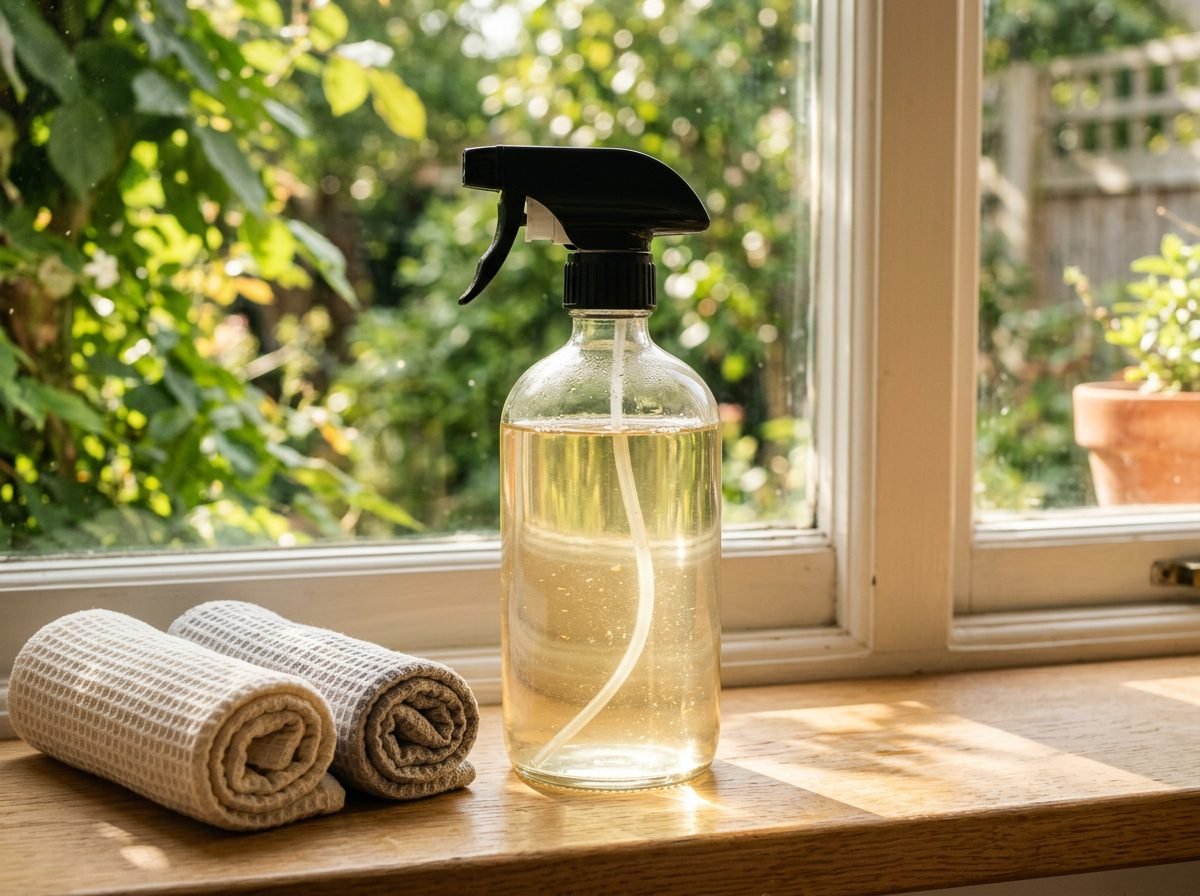
- Non-Toxic Cleaning Solution: 2 cups warm distilled water + 1/4 cup distilled white vinegar + 2 drops mild dish soap in a spray bottle (our proven formula from how to clean windows with Dawn and vinegar).
- Microfiber Cloths: To absorb lifted sludge and dry the aluminum rails.
- Phillips Head Screwdriver (#2): The magic tool to adjust roller wheel tension screws.
- Dry PTFE Lubricant Spray: A non-sticky formula like WD-40 Specialist Dry Lube with PTFE that dries 100% tack-free so dirt and pet fur cannot stick to it.
- Plastic Putty Knife: To gently guide wheels back onto the track without scratching metal.

Step-by-Step: 5-Phase No-Jam Screen Track Protocol
Follow these five steps to deep clean the track and eliminate sticking without removing the screen:
Phase 1: Dry Vacuum & Mechanical Agitation (Never Wet First!)
Spraying liquid onto a track filled with loose dirt and dried garden soil turns dust into thick, gooey mud that cements itself under the roller wheels. Always perform dry extraction first:
- Slide the screen door all the way open to expose one half of the track.
- Take a dry, stiff nylon brush and vigorously sweep loose dirt, dead flies, and pine needles out of the corners toward the center of the track.
- Vacuum the loosened debris with your narrow crevice wand.
- Slide the screen door to the opposite side and repeat the dry sweep and vacuum on the remaining section. (While working on tracks, also check that your exterior drainage slots are clear—see our tutorial on cleaning vinyl window weep holes).
Phase 2: The Warm Vinegar & Dawn Sludge Dissolver
Now that dry debris is gone, tackle the stubborn caked-on mud and barbecue soot:
- Mist your vinegar and dish soap solution generously along the aluminum track channel.
- Allow it to sit for 3 to 5 minutes. The acetic acid gently dissolves alkaline minerals, while the surfactant lifts grease and soil.
- Scrub the track ridges and inner corners with your nylon brush.
- Wrap a microfiber cloth over your index finger or a dull plastic putty knife and slide it firmly down the channel to wipe out the lifted grime.
- Dry the track thoroughly with a fresh cloth. (If your window screen mesh is also dusty, clean it in place using our guide on cleaning window screens without taking them off).
Phase 3: The 15-Second Roller Height Adjustment (The Secret Fix!)
This is the critical step that solves 90% of sticking screen doors! Look closely at the bottom exterior edges of your screen door frame:
- You will see small adjustment holes near the bottom left and right corners (often covered by small plastic plugs). Inside each hole is a Phillips screw connected to the roller wheel spring.
- To Raise the Door: Turn the adjustment screw clockwise. This forces the roller wheel downward, lifting the screen door frame higher off the track. If your door was dragging or scraping metal-on-metal, raising it 1/8 of an inch completely eliminates friction!
- To Lower the Door: If the door is too tight and binding in the top header track, turn the screw counter-clockwise to retract the roller.
- Adjust both bottom corners until the screen door sits completely square in the frame with an even 1/8-inch clearance above the track.
Phase 4: Apply Non-Sticky Dry PTFE Lubrication
Never use classic WD-40, motor oil, or petroleum grease on screen door tracks! Wet oils act like flypaper for garden dirt, dust, and pet hair. Within 48 hours, wet oil forms a black abrasive grinding paste that ruins the nylon wheels.
Instead, use a specialized Dry PTFE Spray. Shake the can well and spray a light, continuous mist directly onto the raised aluminum track rail and into the lower roller wheel housing. Dry PTFE flashes off in 60 seconds, leaving a slick, invisible micro-film that repels moisture and dust. Slide the screen door back and forth several times—it will glide with a single touch!
Phase 5: Reseating a Derailment (The Putty Knife Trick)
If one of the roller wheels jumped off the raised track during cleaning, do not yank or bend the door:
- Lift upward on the screen door frame to compress the top spring guides into the upper channel.
- Slide a flexible plastic putty knife beneath the derailed bottom roller wheel.
- Use the putty knife as a mini ramp to lever the roller wheel back over the raised center ridge of the track until it drops securely onto the rail.
Comparison: Regular Cleaning vs. Pro Screen Track Care
| Factor | Common Mistakes | Cleaning Curb Protocol |
|---|---|---|
| First Step | Spraying water/cleaner immediately (creates mud) | 100% dry brush & crevice vacuum extraction |
| Roller Adjustment | Ignored; frame drags on metal threshold | Corner screws adjusted clockwise to lift frame 1/8″ |
| Lubricant Used | WD-40 / Cooking Oil / Grease (dirt magnet) | Dry PTFE Film (100% non-tacky & dust-repellent) |
| Gliding Lifespan | Sticks again in 3 to 5 days | Smooth, quiet glide for 4 to 6 months |
Pro Tips to Prevent Dirt & Pest Infiltration
Once your sliding screen door is rolling smoothly, use these three maintenance habits to keep it in peak condition:
- Install a Bug Sweep Brush Strip: Most sliding screens have a 1/2-inch air gap along the bottom that lets leaves and spiders crawl inside. Sticking a dense nylon bug sweep along the bottom edge blocks 90% of garden dirt (see our tips on keeping spiders and pests out of window tracks naturally).
- The 30-Second Weekend Vacuum: Whenever vacuuming your patio doorway, take 30 seconds to run the crevice wand down the screen track before loose dirt can pack under the wheels.
- Keep Window Tracks Clean: Learn complete maintenance across your entire home in our foundational guide on how to clean window tracks and remove stubborn gunk.
Frequently Asked Questions (FAQ)
What should I do if my screen door rollers are completely broken?
If turning the adjustment screws doesn’t raise the door, the internal nylon roller wheel or spring has likely cracked from age. You can purchase universal replacement sliding screen door rollers on Amazon for under $10 a pair. They unscrew easily from the bottom rail and snap directly into place.
Can I use cooking spray or olive oil on screen tracks in a pinch?
Never! Cooking oils turn rancid, emit foul odors, attract ants and wasps, and oxidize into a sticky yellow glue that completely ruins the door tracks. Stick to non-toxic dry PTFE or dry silicone spray.
Why does my screen door keep falling off the top track?
If the top of the door pops out of the upper channel, the bottom rollers are adjusted too low, or the top spring guides are compressed or missing. Turn both bottom corner adjustment screws clockwise to lift the door higher into the top guide track.
Summary: Effortless Gliding in 15 Minutes
A sticking, screeching sliding screen door doesn’t mean you need a costly replacement. By following dry extraction first, lifting dirt with mild vinegar foam, adjusting the roller height screws, and protecting the rails with dry PTFE lubricant, you can enjoy breezy, bug-free outdoor living with a screen door that glides like silk.
Pingback: How to Clean Window Screens Without Taking Them Off (Fast Method)
Pingback: How to Get Dog Hair Out of Sliding Door Tracks (Fast Paw-Safe Fix)