⚡ Direct Answer: What Is the Exact Ratio for Cleaning Windows with Dawn and Vinegar?
To mix a streak-free DIY window cleaner without leaving a cloudy film, combine 2 cups of warm distilled water, 1/4 cup of distilled white vinegar, and only 2 to 3 drops of original blue Dawn dish soap. Vinegar dissolves alkaline mineral dust and water spots, while the microscopic dose of Dawn cuts through skin oils and soot without leaving a tacky surfactant residue. Never use more than 3 drops—excess dish soap creates a sticky film that attracts airborne pollen within 48 hours.
Walk onto any professional window cleaning forum or YouTube tutorial, and you will hear cleaners rave about using Dawn dish soap. Search household cleaning blogs, and everyone swears by distilled white vinegar. Naturally, millions of homeowners think: “Why not mix them together?”
You grab a spray bottle, pour in a generous squeeze of blue dish soap, splash in vinegar and tap water, and spray your living room windows. But the moment the glass dries under direct sunlight, you are greeted by a milky, cloudy haze covered in swirling streaks that look worse than the dust you started with.
Most people assume vinegar and Dawn are incompatible, or that DIY cleaners don’t work. In reality, the chemistry is brilliant—you simply fell into the “Too Much Soap” trap. As a home health advocate and practical cleaning specialist, here is the science-backed breakdown of how to clean windows with Dawn and vinegar, the exact ratio to use, and the professional squeegee technique for crystal-clear glass.
The Chemistry: Why Vinegar and Dawn Work Better Together
❄️ Washing Exterior Windows in Cold Winter Weather?
Standard vinegar and water solutions freeze solid at 28°F. If you need to clean outside glass during winter, check out our guide on how to clean windows in freezing weather without them freezing for the exact sub-zero alcohol ratios.
Windows collect two distinct types of atmospheric grime that require opposite chemical reactions to dissolve:
- Inorganic Mineral Grime (Treated by Vinegar): Windblown dirt, calcium dust, sprinkler spray, and acid rain deposits are alkaline minerals. Distilled white vinegar (containing 5% acetic acid, pH ~2.5) chemically neutralizes these alkaline bonds, dissolving mineral haze naturally without harsh commercial fumes.
- Organic Oils & Hydrocarbons (Treated by Dawn): Fingerprints, pet nose smudges, kitchen cooking grease, and outdoor automotive exhaust soot are non-polar organic oils. Vinegar cannot dissolve grease—water and oil simply repel each other. Original blue Dawn is an anionic surfactant that bonds to oil molecules on one end and water molecules on the other, lifting grease off the silica surface.
- The Wetting Agent Advantage: Dawn breaks the surface tension of water, allowing your cleaning spray to sheet smoothly across the glass rather than beading up. This lubrication allows your squeegee rubber blade to glide effortlessly without skipping or chattering.
The #1 Mistake: The “Too Much Soap” Trap
Why do homemade window sprays fail so frequently? Because dish soap is formulated to wash greasy dinner plates submerged in gallons of hot rinse water—not glass that gets wiped with a single rag!
When homeowners pour a “generous squirt” (a tablespoon or more) of Dawn into a 16-ounce spray bottle, it leaves behind an invisible, tacky layer of concentrated surfactants. When that soap film dries:
- It Creates Optical Glare: Direct sunlight illuminates the dried soap polymers, creating rainbow swirls and milky hazing.
- It Acts as a Dirt Magnet: The sticky residue catches floating pollen, fireplace soot, and dust like flypaper. Within 48 hours, your clean windows look dirtier than before you washed them.
- The Fix: Less is infinitely more. You only need 2 to 3 individual drops of dish soap in a full 16-to-24 oz bottle!
The Golden Ratio Recipe (Glass Cleaner Formula)
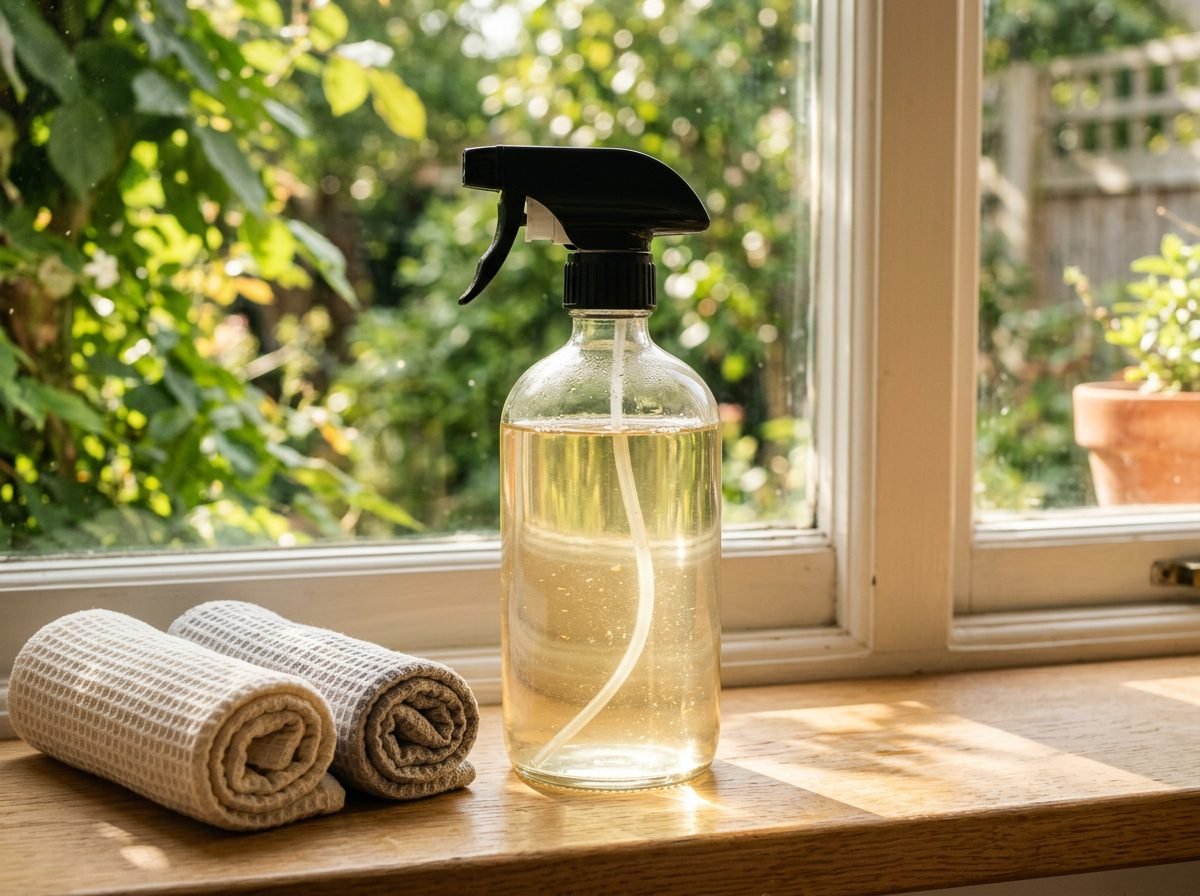
For flawless optical clarity, mix this exact recipe in a clean spray bottle:
🧪 Rashmi’s Exact Streak-Free Window Formula
- 2 Cups Warm Distilled Water: Never use tap water! Tap water contains dissolved minerals (TDS) that leave white rings when evaporated. Distilled water guarantees zero mineral residue.
- 1/4 Cup Distilled White Vinegar (5% Acidity): Cuts hard water scale, light etching, and pollen.
- 2 to 3 Drops Original Blue Dawn Dish Soap: Emulsifies fingerprints and exhaust oils without leaving surfactant buildup.
- Optional for Fast Winter Evaporation: Add 2 tablespoons of 70% isopropyl alcohol during cold months to speed drying time and prevent freezing.
Note: Gently swirl the bottle to combine—do not shake vigorously, or you will create foam that is hard to spray evenly.
Step-by-Step: The 4-Phase Streak-Free Washing Protocol
Having the right formula is half the battle; proper physical technique prevents streaks from ever forming.
Phase 1: Pre-Clean the Window Tracks and Sills First
Before spraying a drop of liquid on your glass, open the sash and vacuum the bottom tracks! If you spray glass with a filthy sill underneath, dirty water drips down and mixes with track dust, splashing mud back onto your clean glass (see our master guide on how to clean window tracks and remove sliding door gunk).
Phase 2: Spray Generously in the Shade
Never clean windows in direct baking sunlight! Hot glass causes water to flash-evaporate before you can squeegee it off, leaving behind concentrated streaks. Clean on an overcast day or when windows are shaded. Mist your Dawn and vinegar solution evenly across the pane.
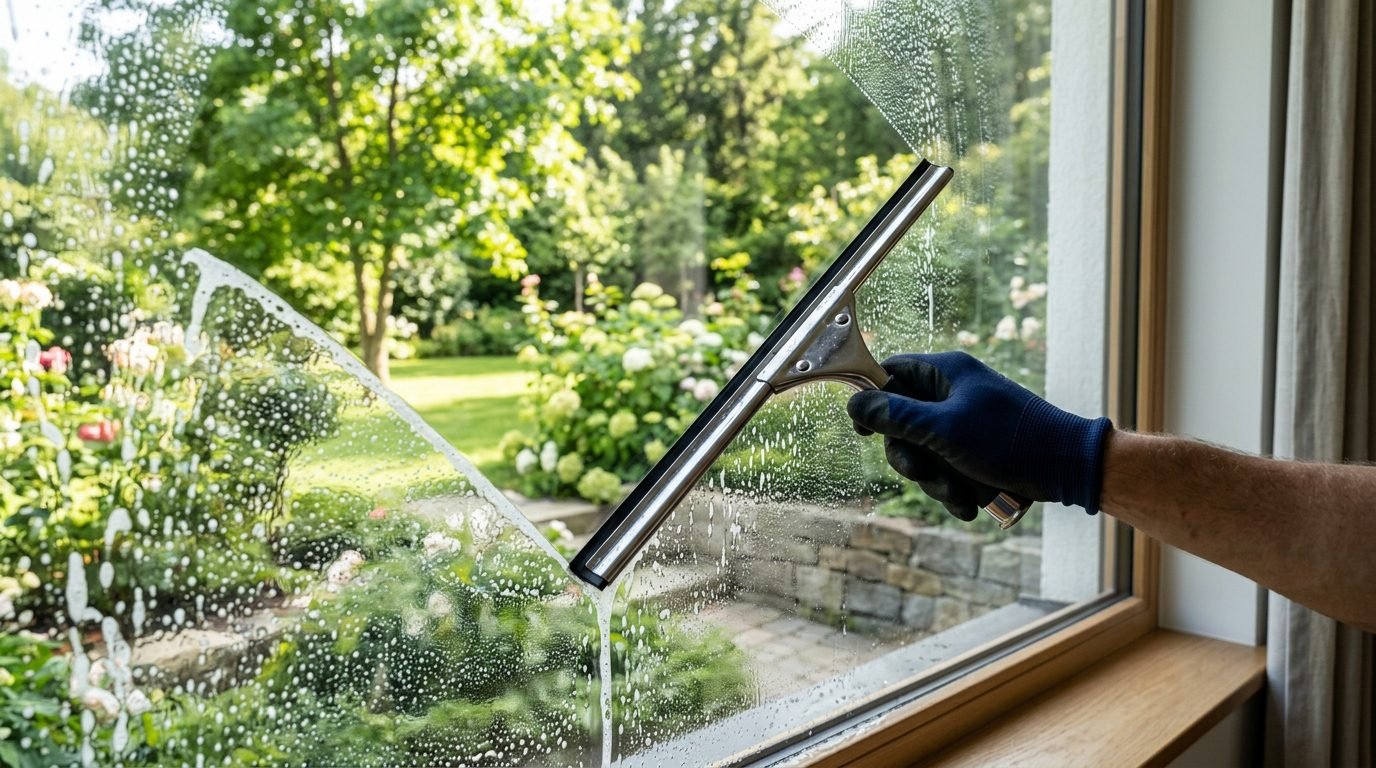
Phase 3: The Professional Squeegee S-Pattern
- Use a soft microfiber washer wand or sponge to agitate bird droppings, dried bugs, and grease.
- Grab a professional squeegee with a fresh, sharp rubber blade (see our test on window vacuum vs standard squeegee).
- Wipe a 1-inch dry strip across the very top header with a microfiber cloth.
- Place the squeegee blade in that dry strip and pull down in smooth, overlapping horizontal S-curves or straight downward passes.
- The Golden Squeegee Rule: Wipe the rubber blade dry with a clean cloth after every single stroke! Dragging a wet blade back onto dry glass creates immediate vertical streak lines.
Phase 4: Detail the Perimeter Borders
Water naturally pools in the 1/4-inch border where glass meets the window frame. Take a dry, waffle-weave microfiber cloth wrapped over your index finger and trace the perimeter frame to absorb trapped droplets before they can drip down.
Can You Use Dawn Powerwash on Windows?
Dawn Powerwash has become a viral household phenomenon. Can you spray it straight onto your windows?
- On Interior Windows: No! Dawn Powerwash contains alcohol solvents and concentrated surfactant foaming agents. In enclosed rooms, it produces too much dense foam to remove with a simple towel, leaving heavy streaks.
- On Filthy Exterior Windows / Sunrooms: Yes, with a hose! If your exterior glass is encrusted with months of dried tree sap, heavy barbecue grease, or spider webbing, a light spray of Powerwash followed by an immediate high-pressure garden hose rinse works wonders. (For 2-story windows, pair this with our recommended water-fed pole kit for homeowners).
How to Strip Old Sticky Soap Residue from Glass
If your windows already have a cloudy, sticky film from years of using too much dish soap or commercial aerosol glass sprays, you must strip that layer before your windows can truly shine:
- Mix 1 part warm distilled water and 1 part white vinegar with ZERO soap.
- Spray the glass liberally and allow the warm acid solution to dwell for 2 minutes to dissolve the surfactant film.
- Scrub firmly with a clean microfiber cloth.
- Squeegee clean and dry. Your glass will instantly feel slick, smooth, and crystal clear!
Frequently Asked Questions (FAQ)
Can I use Dawn and vinegar on tinted windows?
Yes, provided the tint is intact! Because original blue Dawn is ammonia-free, it is safe on aftermarket automotive and home solar film. However, we recommend diluting vinegar further (or using pure distilled water and Dawn) on interior film—see our full breakdown on how to clean tinted windows without damaging them.
Can I use Dawn and vinegar on hard water shower doors?
Yes! It is one of the most effective non-toxic shower glass routines. For heavy calcium buildup that has sat for months, check out our master guide on removing stubborn hard water stains without scrubbing or our drill buffing protocol for etched hard water spots.
Why do newspaper window cleaning tricks leave black ink smudges now?
Thirty years ago, newspapers were printed with petroleum-based inks that acted as a mild polishing wax on glass. Today, almost all modern newspapers use soy-based water-soluble inks that dissolve into wet, greasy black smudges when exposed to vinegar and water. Ditch the newspaper and use lint-free waffle-weave microfiber cloths!
Summary: The $0.10 Solution to Professional Window Clarity
You don’t need expensive commercial aerosol sprays loaded with artificial perfumes and harsh chemicals. With 2 cups of distilled water, 1/4 cup of white vinegar, and just 2 to 3 drops of Dawn, you have a professional-grade window cleaner that cuts grease, dissolves mineral dust, and leaves glass sparkling clear for pennies per bottle.
✨ Pair Your Solution with a Pro Squeegee:
Even the best soap recipe will streak if your rubber blade is rounded or pitted. See our comprehensive guide on Unger vs. Ettore squeegees for homeowners to choose the right blade for streak-free passes.
Pingback: How to Clean High Exterior Windows Without a Ladder (Safe Guide)
Pingback: Best Telescopic Window Cleaning Pole for High Windows (2026 Guide)
Pingback: How to Clean Windows in Freezing Weather (Without Freezing!)
Pingback: How to Clean Double Hung Windows That Don't Tilt (From Inside!)
Pingback: How to Clean Casement Windows from Inside (The Hinge Gap Trick)
Pingback: How to Clean Window Tracks: Get Grime Out of Sliding Doors Easily