⚡ Direct Answer: How to Clean Black Mold from Window Sills Without Bleach
To eliminate black mold from window sills permanently without bleach, spray undiluted 3% hydrogen peroxide or a botanical thymol cleaner (Concrobium / Benefect Decon 30) directly onto the affected sill. Allow a 10-minute dwell time to penetrate porous wood or drywall and destroy the root hyphae. Gently scrub residual melanin stains using a baking soda paste, wipe clean with damp microfiber, and keep indoor relative humidity below 50% to prevent spores from germinating again.
As cold autumn and winter air hits your exterior window panes, warm indoor air condenses into pools of moisture along your window sills. Within days, that innocent moisture turns into unsightly, speckled black patches that smell damp and stale.
Most homeowners panic, reach under the sink for a bottle of chlorine bleach, and aggressively scrub the sill. The black stains magically disappear within seconds. But two weeks later, the mold returns—often darker, fuzzier, and covering twice as much surface area.
As a family health advocate and home wellness specialist, I advise against using chlorine bleach around windows. Bleach fails to eliminate the root cause on porous surfaces, off-gasses toxic chlorine fumes into bedrooms, and actually feeds fungal colonies over time. Here is the complete, science-backed guide on how to clean black mold from window sills without bleach safely, naturally, and permanently.
The Bleach Myth: Why Chlorine Fails on Porous Window Sills
🧼 Is Mold Spreading to Your Window Rubber Seals?
Cleaning porous rubber gaskets requires extra care to prevent polymer embrittlement and draft leaks. Follow our dedicated tutorial on how to clean mold from window track rubber seals without rotting weatherstripping.
🛑 Stop the Moisture Source Feeding Your Sill Mold
Cleaning mold is only half the battle—if cold glass keeps sweating, spores will return in weeks. See our complete guide on how to stop window sweating in winter to cut off the moisture supply permanently.
Why does bleach make mold return with a vengeance? The explanation lies in chemistry and fungal biology:
- Bleach is 90% Water: Standard household bleach contains roughly 5% to 6% sodium hypochlorite and over 90% water.
- Molecular Size Barrier: The chlorine molecule is chemically too large to penetrate porous building materials like wood sills, drywall casing, and deteriorating silicone caulk. The chlorine remains strictly on the surface, stripping the dark melanin pigment from the mold (making it look “cured”).
- Water Feeds the Deep Roots: While the chlorine evaporates into the air as harsh VOCs, the remaining water soaks deep into the wood fibers. The microscopic fungal roots (called mycelia and hyphae) drink that moisture, thrive, and erupt back to the surface within 10 to 14 days.
- Respiratory and Pet Toxicity: Inhaling vaporized chlorine gas in enclosed bedrooms triggers asthma, irritates mucous membranes, and creates toxic hazards for pets that sit on window perches.
🌿 The Non-Toxic Alternative That Penetrates Roots:
Instead of chlorine, professional remediation specialists use oxidizing agents (like 3% hydrogen peroxide) or botanical antimicrobial plant extracts (like thymol or mineral salts). These agents have smaller molecular weights that penetrate deep into porous wood grain, oxidizing the fungal cell walls and physically crushing mold spores at the root.
Understanding the Spores: What Is Growing on Your Sill?
When people see black specks on their window frames, they immediately worry about toxic “black mold” (Stachybotrys chartarum). In residential window sills, the dark colonies are typically one of three common moisture-loving fungi:
- Cladosporium: The most common window sill fungus. It thrives on condensation pooling along chilly aluminum and vinyl frames, creating olive-green to charcoal-black velvet patches. It triggers sneezing, nasal congestion, and eye irritation.
- Aspergillus & Penicillium: Fast-growing powdery colonies that release hundreds of thousands of airborne spores when disturbed dry.
- Stachybotrys chartarum: A toxigenic species that grows on water-logged cellulose (wood sills and drywall paper) following chronic, unaddressed moisture leaks or failing exterior seals.
Regardless of the specific genus, all indoor mold must be safely neutralized and extracted without releasing millions of active spores into your home’s air circulation.
Non-Toxic Mold Elimination Arsenal (Toolkit Checklist)
Before tackling your window sills, assemble these non-toxic, pet-safe supplies:
🛠️ Non-Toxic Window Sill Mold Remediation Kit
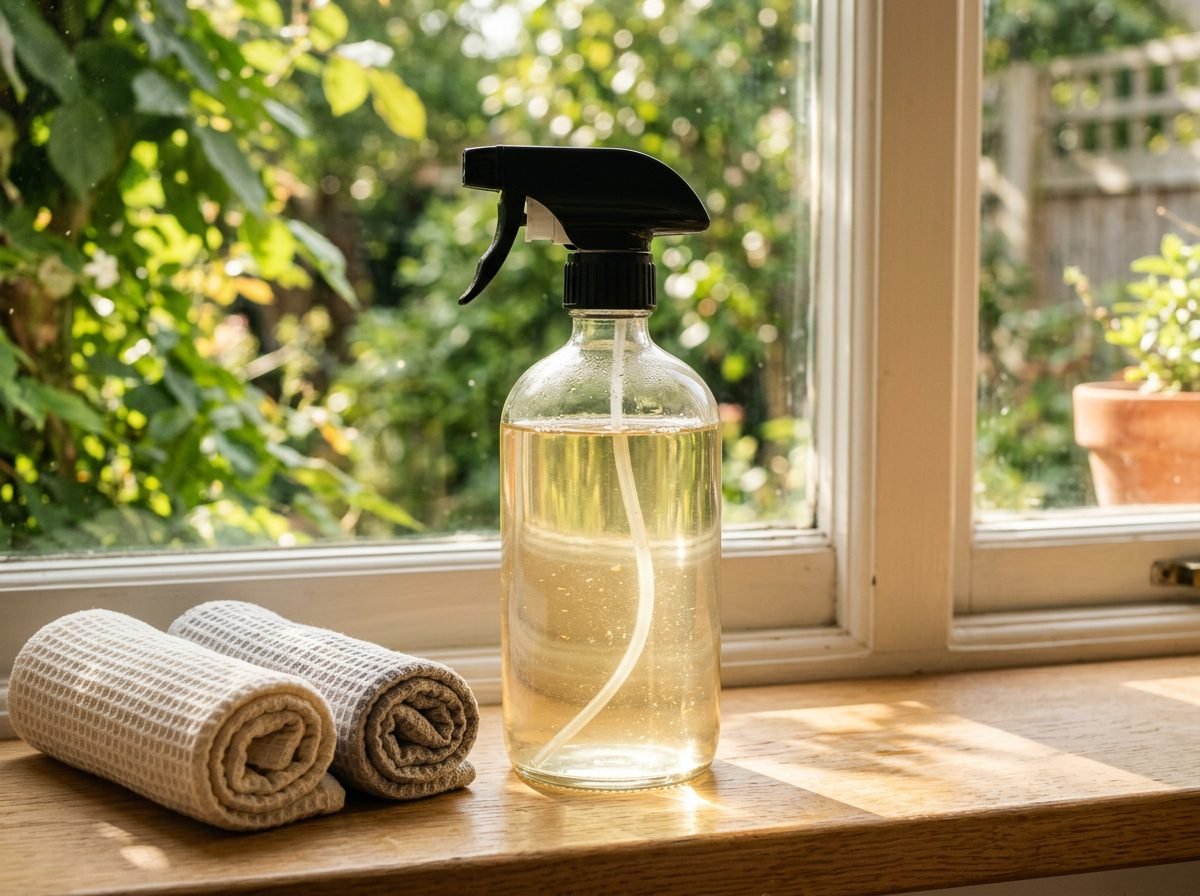
- 3% USP Hydrogen Peroxide: Readily available in standard brown bottles. It breaks down into pure water and oxygen, leaving zero toxic chemical residues.
- Botanical Antimicrobial Spray (Alternative / Long-Term Shield): A professional-grade botanical formula like Concrobium Mold Control Spray (encapsulates and crushes spores with natural mineral salts) or Benefect Botanical Decon 30 (thymol-based).
- Pure Baking Soda (Sodium Bicarbonate): Serves as a gentle abrasive scrub to lift embedded pigment staining while neutralizing acidic fungal waste.
- N95 or KN95 Respirator Mask & Nitrile Gloves: Critical personal protection to avoid inhaling dislodged mycotoxins during cleaning.
- Microfiber Cloths: High-density split microfiber cloths that trap microscopic spores rather than smearing them across the sill.
- Small Nylon Track & Grout Detail Brush: For cleaning corner joints, weep channels, and sash tracks.
- Digital Indoor Hygrometer: A ThermoPro Digital Room Hygrometer to monitor indoor humidity levels and prevent moisture condensation.
Step-by-Step: The 5-Phase Non-Toxic Elimination Protocol
Follow this systematic protocol to safely clean, kill, and prevent window sill mold without releasing airborne spores into your living space.
Phase 1: Containment & Personal Protection (The #1 Rule: Never Dry Dust!)
Never use a dry rag, feather duster, or dry vacuum on moldy window sills! Aggitating dry mold launches millions of microscopic spores into the air, which settle into bedding, carpets, and air vents.
- Put on your N95 respirator mask and nitrile gloves.
- Close interior bedroom doors to isolate the room.
- If the weather allows, crack the window slightly to establish positive outward airflow, or run an air purifier equipped with a True HEPA filter.
Phase 2: Direct Liquid Saturation (The 10-Minute Dwell Time)
Pour fresh 3% hydrogen peroxide into a clean spray bottle (or use Concrobium Mold Control):
- Liberally spray the solution across the entire infested area, including the painted sill, corner trim, vinyl sash joints, and silicone seams. Ensure the surface is completely saturated.
- The Critical Dwell Time: Walk away and allow the solution to sit undisturbed for 10 to 15 minutes. You may notice mild fizzing as the hydrogen peroxide oxidizes organic matter. This dwell time allows the solution to soak deep into wood grain pores and neutralize the vegetative mycelium.
Phase 3: The Baking Soda Lift for Stubborn Melanin Staining
Fungi produce melanin—a deep dark pigment that stains paint and vinyl even after the mold organism is completely dead. To lift these dark marks naturally without harsh bleaching agents:
- Mix 3 parts baking soda with 1 part warm water in a small dish to form a thick toothpaste consistency.
- Apply the paste directly over stubborn black marks.
- Gently scrub with a soft nylon brush or old toothbrush using circular motions. The sodium bicarbonate crystals provide gentle mechanical lift without stripping wood paint or scratching vinyl frames.
- If the sill track is full of built-up gunk, check our comprehensive guide on how to clean window tracks and remove sliding door grime.
Phase 4: Single-Direction Microfiber Extraction
Fold a clean microfiber cloth into quarters:
- Dampen the cloth with warm water and wipe the lifted slurry using firm, single-direction strokes from the cleanest section toward the dirty corners.
- Flip the cloth to a fresh quarter after each pass. Do not scrub back and forth, as this smears viable spores into clean wood pores.
- Dry the sill thoroughly with a second, dry microfiber cloth. Moisture left behind will encourage new fungal growth.
- Check that track drainage paths are not clogged—learn how to inspect and clear them in our guide on cleaning vinyl window weep holes.
Phase 5: The Anti-Microbial Residual Shield
Once the sill is clean and bone dry, mist a light, even coat of botanical Concrobium or 3% hydrogen peroxide over the surface and let it air-dry completely. As Concrobium dries, its natural tri-salt mineral matrix forms an invisible microscopic barrier that crushes any new airborne spores attempting to settle on the sill.
Material-Specific Care: Wood vs. Vinyl vs. Silicone Caulk
Notice persistent yellowing or amber stains on your vinyl sashes after mold removal? Discover how to reverse grease and UV damage in how to clean yellowed vinyl window frames.
Different window sill materials require tailored strategies to protect structural integrity:
| Sill Material | Primary Vulnerability | Best Treatment Strategy |
|---|---|---|
| Painted Wood Sills | Cellulose substrate absorbs water, causing deep rot | 3% Peroxide saturation + prime with mold-resistant enamel primer |
| Vinyl & PVC Frames | Surface mold feeds on dust; easily stained | Baking soda paste + distilled vinegar or peroxide wash |
| Silicone Caulk Seams | Mold grows underneath failing silicone bonds | If mold is behind caulk, slice out old bead and recaulk with 100% silicone |
| Drywall Window Returns | Paper backing disintegrates when waterlogged | Light botanical misting; replace drywall if soft or crumbly |
How to Stop Window Sill Mold from Ever Returning
Mold spores exist everywhere in the outdoor atmosphere. They require just three conditions to bloom: darkness/still air, an organic food source (dust/wood), and liquid moisture. Eliminating moisture is the ultimate cure.
- Solve Window Condensation at the Source: Condensation is the #1 culprit behind window mold. Review our definitive guide on how to stop condensation on double-glazed windows in winter to balance indoor dew points and seal thermal bypasses.
- Maintain Indoor Relative Humidity Below 50%: In winter, keep your indoor humidity between 35% and 45% using kitchen exhaust fans and a portable dehumidifier in bedrooms.
- Wipe Sills Daily During Freezing Weather: Keep a dedicated squeegee or microfiber cloth on bedroom window sills. A 10-second morning wipe removes pooled overnight dew before spores can germinate.
- Keep Window Tracks Clean of Organic Dust: Dirt and pet hair resting in sliding tracks provide the organic food supply mold needs. For pet owners, follow our tutorial on how to get dog hair out of sliding door tracks.
- Ensure Window Screens Are Clean: Dirty mesh screens block air circulation and trap spore-laden dust. Follow our guide on cleaning window screens without removing them.
Frequently Asked Questions (FAQ)
Can I use vinegar and hydrogen peroxide together?
Never mix white vinegar and hydrogen peroxide in the same spray bottle! Combining them creates peracetic acid, a corrosive chemical that irritates the eyes, skin, and respiratory tract. You can use them sequentially (e.g., spray peroxide, wipe dry, then spray vinegar), but never mix them together.
Does vinegar kill black mold on window sills?
Yes! Distilled white vinegar containing 5% to 6% acetic acid kills roughly 82% of mold species and penetrates porous wood effectively. However, 3% hydrogen peroxide is generally faster-acting and superior at lifting dark melanin stains from light-colored painted sills.
When is window mold dangerous enough to call a professional?
According to EPA guidelines, if mold growth covers more than 10 square feet (approximately a 3ft x 3ft area), or if the wood sill has become soft, spongy, and structurally rotten from prolonged framing leaks, you should consult an IICRC-certified mold remediation specialist.
Why did mold grow on my vinyl window frame if vinyl isn’t organic?
While mold cannot eat synthetic PVC vinyl, it feeds voraciously on the microscopic layer of dust, skin cells, pet dander, and cooking oils that settle on the frame. Combined with standing condensation water, dirty vinyl tracks create an ideal fungal incubator.
Summary: Protect Your Home’s Air with Smart Natural Solutions
Cleaning black mold from window sills does not require harsh chemical bleaches that sting your eyes and damage your family’s lungs. By using 3% hydrogen peroxide to oxidize fungal roots, lifting stains with baking soda, and controlling indoor humidity, you can restore clean, healthy sills that stay mold-free all winter long.
Pingback: How to Clean Weep Holes in Vinyl Windows (And Prevent Sill Rot)
Pingback: How to Stop Condensation on Double Glazed Windows in Winter
Pingback: How to Clean Mold from Window Track Rubber Seals (Without Rotting Weatherstripping) - Cleaning Curb
Pingback: How to Stop Window Sweating in Winter (7 Ways to Prevent Sill Puddles) - Cleaning Curb
Pingback: How to Clean Black Aluminum Window Frames (Without Fading or Chalking) - Cleaning Curb