⚡ Direct Answer: How to Clean Skylights from Inside Without a Ladder?
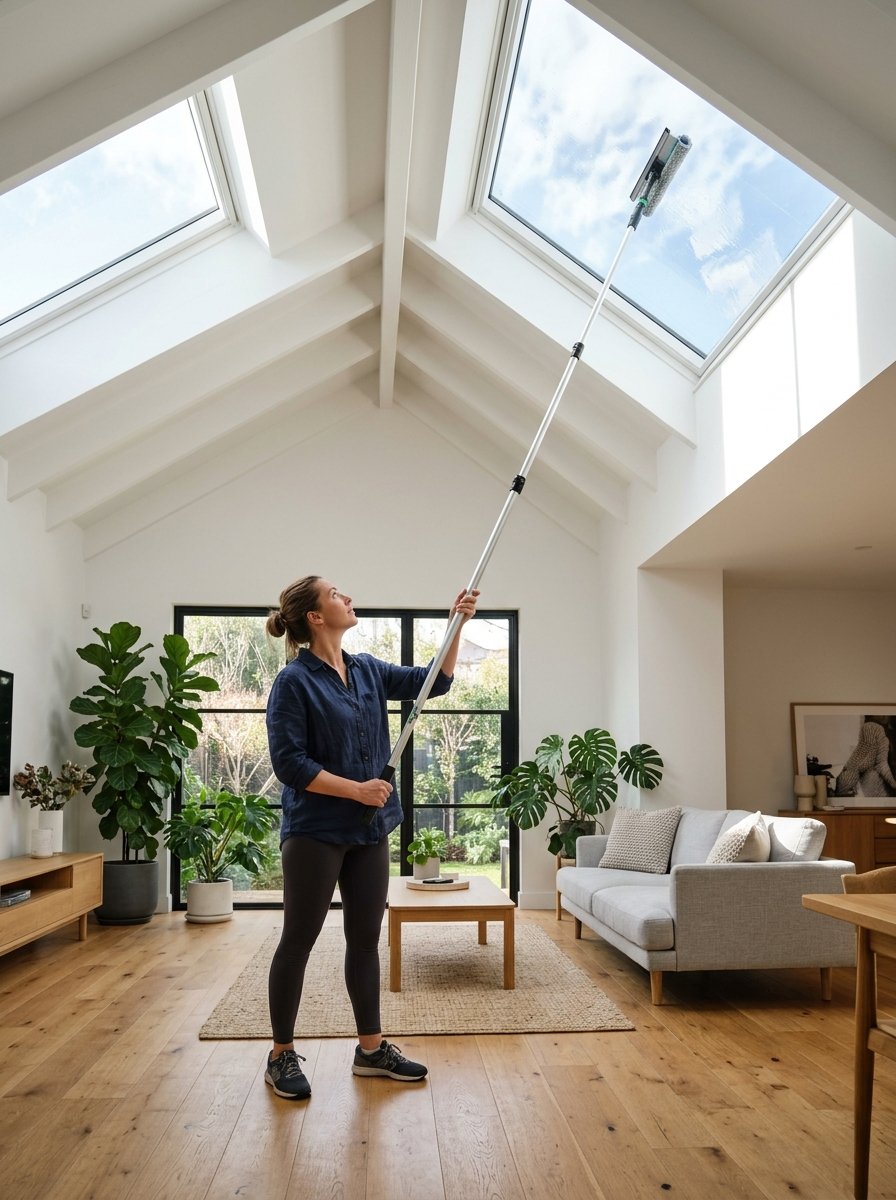
To clean interior skylights without a ladder safely: 1) Spread a plastic or canvas drop cloth directly beneath the skylight to protect furniture and floors. 2) Attach a bendable microfiber dust head to a telescopic extension pole (12–24 ft) to sweep away cobwebs, dead gnats, and loose dust. 3) Replace with a microfiber scrubber pad lightly dampened with a 50/50 warm water and white vinegar solution—wringing out 90% of the liquid so it cannot drip overhead. 4) Set an angle-adapter hinge on the pole to match the skylight pitch, and scrub the glass in overlapping horizontal passes. 5) Swap to a lightweight squeegee or a dry microfiber waffle towel to buff the pane streak-free from the floor.
Skylights are one of the most stunning architectural features in modern homes, flooding living rooms, master bedrooms, and stairwells with glorious natural daylight. But over months of seasonal use, that heavenly view turns into an eye-level eyesore: spiderwebs stretching across the corners, dead flies collected on the lower ledge, and a dusty film of cooking grease and heating soot clouding the glass.
Because skylights are typically mounted in vaulted cathedral ceilings 12 to 22 feet above the floor, cleaning them strikes fear into the heart of most homeowners. Lugging a heavy aluminum extension ladder indoors, balancing the feet precariously on hardwood floors or living room stairs, and leaning backward at an awkward angle is a recipe for catastrophic falls. According to the World Health Organization and OSHA, ladder falls account for over 160,000 emergency room visits in the U.S. every year.
The good news? You never need to climb a ladder to get sparkling clear skylight glass. With the right telescopic extension pole, a multi-angle hinge adapter, and a drip-free cleaning technique, you can clean any vaulted skylight while keeping both feet planted safely on the rug. Here is our complete master guide on how to clean skylights from inside without a ladder.
🔍 Need the Best Extension Pole for Vaulted Ceilings?
Compare the top models for reach, stiffness, and overhead weight in our roundup of the best telescopic window cleaning poles for high windows.
The Two Big Obstacles: Gravity Drips & Awkward Angles
Cleaning vertical windows is simple because water flows straight down the glass into a sill towel. Overhead skylights present two unique physical challenges that cause most DIY attempts to fail:
- The Gravity Drip Disaster: When you work overhead with wet tools, gravity works against you. If your cleaning pad is dripping wet, filthy gray water will run down the fiberglass extension pole straight into your armpits and face, or splatter all over your velvet sofa, dining table, or hardwood flooring.
- The Roof Pitch Angle: Cathedral ceilings and roof rafters sit at 30-degree to 60-degree pitch angles. A standard straight extension pole pushes your squeegee flat against the edge, preventing the rubber blade from making full, even contact across the glass pane.
⚠️ Ladder Safety Rule: Never Stand on Furniture!
Never place a stepladder on a bed, dining table, or sofa cushions to reach an overhead skylight. Soft cushions shift under body weight, causing instant tip-overs. A professional telescopic extension pole costs a fraction of an emergency room visit and keeps you 100% safe on solid ground.
🛠️ Tools & Equipment You Will Need
- 12-to-24 Foot Telescopic Extension Pole: Lightweight aluminum or fiberglass with a universal threaded tip.
- Pivoting Multi-Angle Hinge Adapter: Attaches between the pole and cleaning tool so you can adjust the head to match your ceiling pitch.
- Microfiber Scrubber Sleeve & T-Bar: High-density microfiber grips and lifts soot without scratching.
- Lightweight Squeegee Channel (10-inch or 12-inch): (See our top picks in Unger vs. Ettore squeegee for homeowners).
- Canvas or Plastic Drop Cloth: Sized to cover the entire floor footprint beneath the skylight shaft.
- Distilled White Vinegar & Warm Water: 50/50 mixture (from our proven formula in how to clean windows with Dawn and vinegar).
- Protective Eyewear: To protect eyes from falling dry dust and particulate.
DocaPole 12-to-24 Foot Telescopic Extension Pole Kit
Heavy-duty lightweight aluminum pole featuring multi-angle rotation, microfiber washer, and streak-free squeegee for cathedral ceilings up to 30 feet high.
Step-by-Step: The 5-Phase Drip-Free Protocol
Follow these phases sequentially. The order is crucial: never skip dry dusting, or you will turn loose cobwebs and soot into muddy black sludge that coats the glass.
Phase 1: Zone Protection & Furniture Shielding
- Clear small lightweight furniture, rugs, and decor out of the area directly beneath the skylight.
- If the skylight is positioned over a large dining table, bed, or piano, cover the furniture completely with plastic painter’s sheeting or old bed sheets.
- Spread a drop cloth across the floor to catch falling debris. Put on safety glasses to keep falling dust out of your eyes.
Phase 2: The Critical Dry Dusting Pass
Skylight shafts act as natural chimney thermal traps, collecting floating indoor dust, spider webs, and dead insects along the bottom wood trim.
- Attach an electrostatic microfiber duster or a soft-bristled cobweb brush to your telescopic extension pole.
- Extend the pole to reach the upper corners of the skylight well.
- Gently sweep the ceiling drywall corners, the wood casing, and the bottom ledge to pull down webs and dead insects.
- Sweep across the face of the glass to lift loose dry dust. All dry debris will fall harmlessly onto your drop cloth.
Phase 3: The 90% Wring-Out Rule (Preventing Drips)
This is the most important technique in overhead cleaning:
- Dip your microfiber washer sleeve into a bucket containing warm water, distilled white vinegar (50/50), and just 1 drop of gentle dish soap.
- Squeeze out 90% of the liquid! The microfiber should feel damp and warm to the touch, but it must not drip a single droplet when held vertically. Microfiber has millions of split microscopic hooks that grab grease using capillary action—it does not need standing puddles of water to clean effectively.
Phase 4: Angle Tuning & The Overlapping Wash
- Attach your multi-angle hinge adapter to the pole tip and attach the damp microfiber scrubber.
- Adjust the hinge angle so the flat face of the scrubber sits flush against the angled roof glass while you stand comfortably on the floor.
- Raise the pole and scrub the skylight glass in steady, overlapping horizontal strokes, working from the top down to the bottom sill.
- Flip the scrubber to the clean side and make a second pass over any stubborn bug spots or kitchen grease films.
Phase 5: Squeegee Pull or Microfiber Buffing
You have two options for drying, depending on your skill with high extension poles:
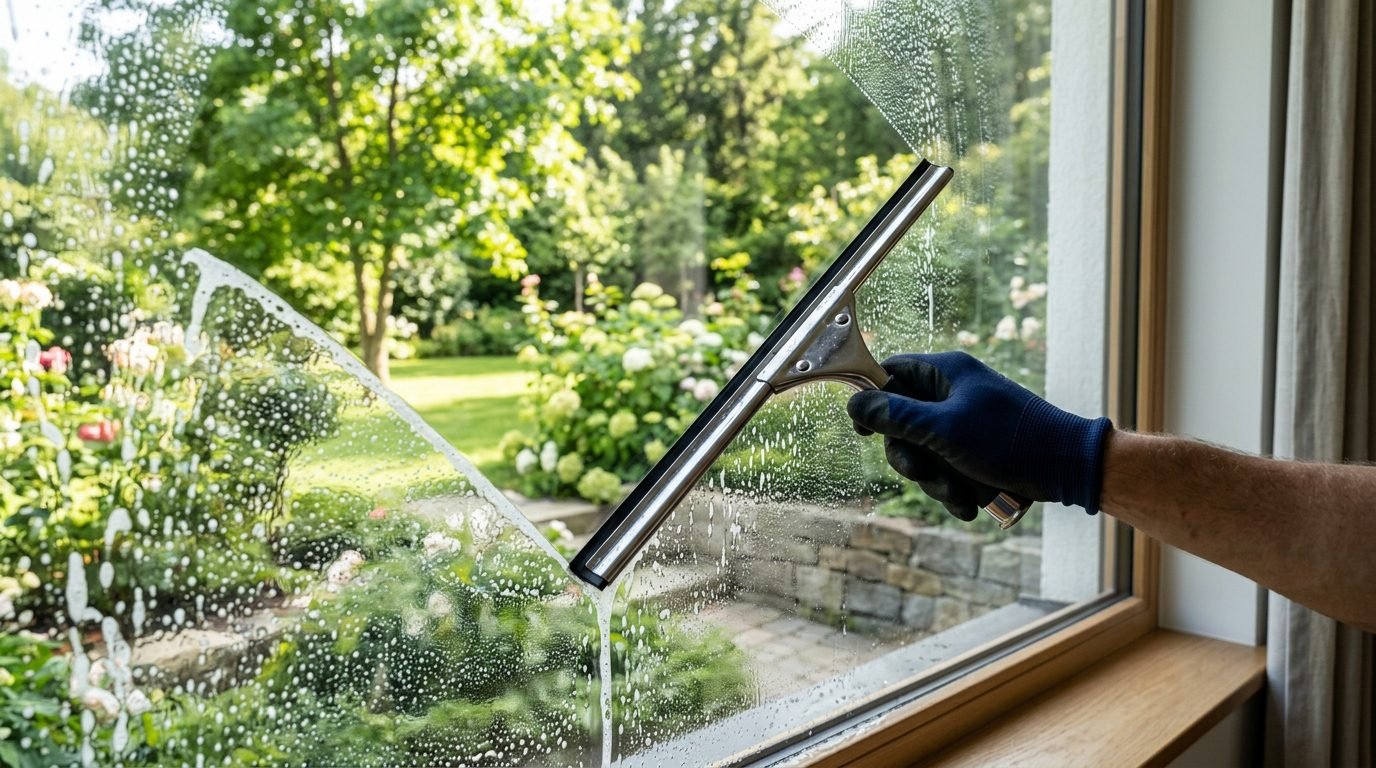
- Option A: Squeegee Finish (Fastest): Attach your squeegee to the angle adapter. Starting at the top corner, pull the squeegee straight down or across in overlapping strokes. (If you need a lightweight squeegee that won’t flex 20 feet up, use an Unger stainless steel channel as reviewed in our Unger vs Ettore squeegee showdown).
- Option B: Microfiber Dry Wrap (Easiest for Beginners): If squeegeeing at a 45-degree angle feels unwieldy, wrap a dry, lint-free waffle-weave microfiber towel around your scrubber pad and clamp it with rubber bands. Reach up and buff the damp glass dry. Because the glass was only lightly dampened, it buffs clear in under 60 seconds with zero streaks!
Special Skylight Considerations
Glass vs. Acrylic / Polycarbonate Domes
Many older skylights and bubble domes are made from clear acrylic or polycarbonate plastic, not glass. Never use abrasive powders, scouring sponges, or ammonia-based cleaners on plastic skylights! Harsh chemicals cause plastic to craze (form millions of tiny spiderweb cracks) and turn milky white. Stick exclusively to warm water, mild dish soap, and ultra-soft microfiber.
Fogged Between the Panes? Condensation vs. Seal Failure
If your skylight remains hazy or cloudy even after cleaning both interior and exterior surfaces, inspect the glass closely. If moisture droplets or white mineral haze are trapped between the double-glazed panes, the perimeter desiccant seal has failed. Learn how to tell the difference in our guide on foggy glass and broken window seals, or control winter humidity with how to stop condensation on double-glazed windows.
What About the Exterior Roof Glass?
For exterior roof skylights, climbing on pitched roof shingles is just as dangerous as indoor ladders. Instead, clean exterior roof panes from the ground using a high-reach water-fed pole system (see our comprehensive review in the best water-fed pole kits for homeowners).
Frequently Asked Questions
How often should interior skylights be cleaned?
For most homes, cleaning interior skylights twice a year (spring and autumn) is ideal. However, if your skylight is located directly above a kitchen or a high-moisture master bathroom, a quick quarterly dusting and wipe-down will prevent greasy cooking fumes and hairspray buildup from baking onto the glass.
Can I clean an openable Velux roof window from inside?
Yes! Most modern venting roof windows and Velux skylights feature a center-pivot mechanism that allows the entire sash to rotate 180 degrees. Once rotated, a barrel bolt on the top of the sash clicks into the bottom frame keeper, locking the window inverted so you can comfortably clean the exterior glass from inside the room without any extension poles.
Can I use a motorized window vacuum on high skylights?
While window vacuums (like the Kärcher WV series) work brilliantly on vertical glass, they are generally not recommended for steep overhead skylights on extension poles. Because window vacs rely on an internal dirty-water reservoir, tilting the vacuum horizontally or past 45 degrees can cause wastewater to spill into the motor or leak onto the ceiling.
Pingback: How to Stop Condensation on Double Glazed Windows in Winter