⚡ Direct Answer: How to Clean Textured Glass Shower Doors?
To clean textured glass shower doors (rain, pebbled, or hammered glass): 1) Avoid flat rubber squeegees, which skip across raised ridges and leave soapy water trapped in the recesses. 2) Spray a foaming solution of equal parts warm distilled white vinegar and water with 1 tablespoon of Dawn dish soap to cling to vertical contours. 3) Allow the foam to dwell for 10 minutes to dissolve calcium scale and body oils. 4) Scrub the textured valleys using a soft-bristled nylon brush or soft drill brush in gentle circular patterns. 5) Rinse thoroughly with warm water and blot dry with a plush waffle-weave microfiber towel.
Textured glass shower enclosures—such as rain glass, pebbled glass, hammered glass, or reeded fluted panes—are beloved by interior designers and homeowners for good reason. They provide elegant privacy, diffuse bathroom lighting softly, and hide minor water streaks far better than clear float glass.
However, when it comes to routine deep cleaning, textured shower glass is notoriously frustrating. Homeowners grab their everyday window squeegee after a shower, swipe it down the door, and discover that the flat rubber blade only contacts the raised “peaks” of the texture. The microscopic “valleys,” dimples, and grooves remain soaking wet, trapping evaporated tap water, soap scum, and calcium carbonate deep inside the pattern.
Over months of daily use, those recessed grooves fill with a cloudy white mineral crust that turns yellow or orange from iron and body oils. If you try to scrub it out with abrasive green scouring pads or harsh abrasives, you risk scratching the delicate pattern permanently. Here is our master guide on how to clean textured glass shower doors using non-scratch chemistry, multi-directional agitation, and proper sealing techniques.
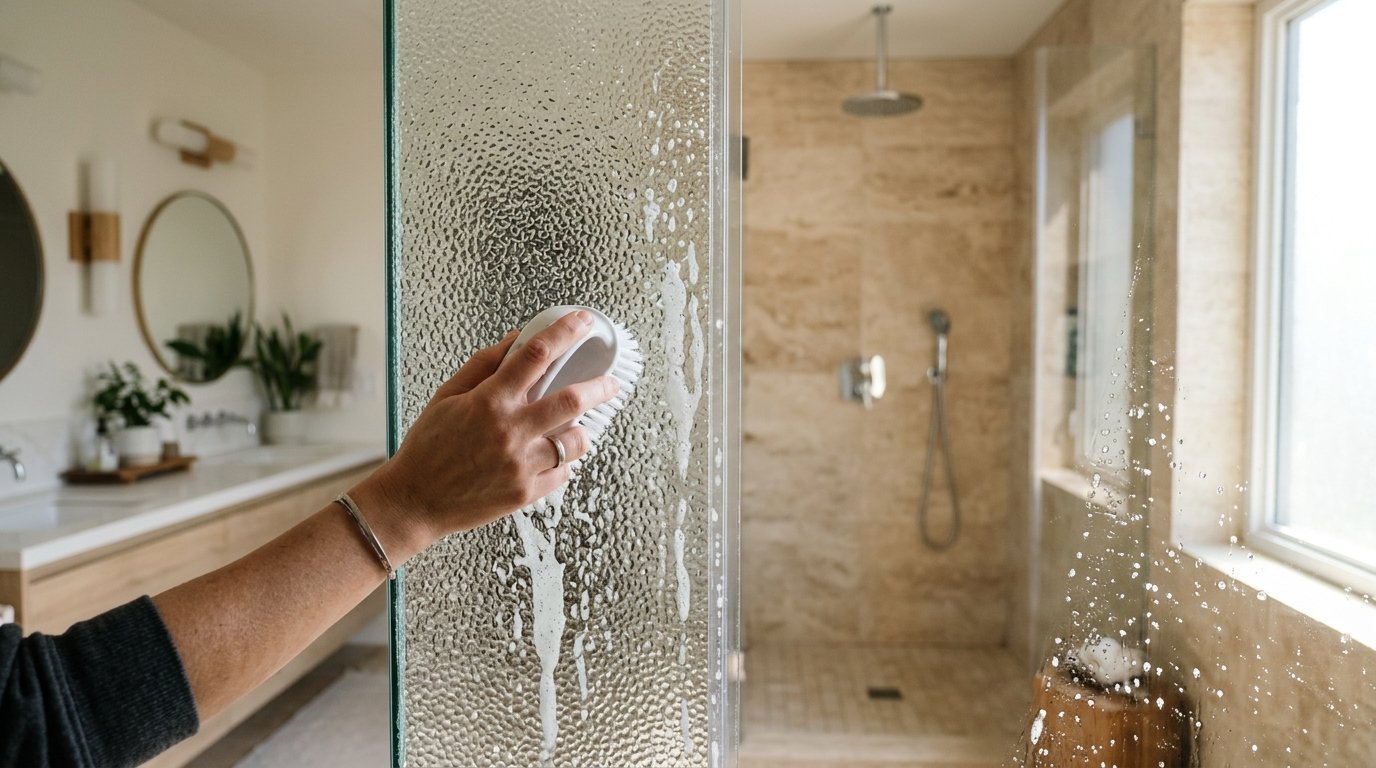
Why Squeegees Fail on Textured Shower Doors
Have thick, rock-hard mineral deposits embedded deep within textured privacy glass? Follow our specialized acid-compress descaling tutorial in how to clean frosted glass shower doors with heavy limescale.
🚿 Squeegeeing Textured or Rain Glass?
Standard stiff squeegees chatter across textured grooves. See which dual-lip flexible silicone wipers flex into patterned glass in our roundup of the best squeegees for glass shower doors.
Understanding the physics of textured glass explains why standard shower maintenance routines fail:
- The “Bridging” Problem: A traditional window squeegee uses a straight, rigid vulcanized rubber blade designed for perfectly flat glass (as explained in our Unger vs. Ettore squeegee guide). On rain or hammered glass, the straight blade bridges across the highest ridges, leaving 60% of the surface area untouched.
- Trapped Evaporation Wells: The tiny recessed valleys act as microscopic evaporation ponds. As hot shower water dries inside the dimples, calcium, magnesium, and silica precipitate out of solution, hardening into concrete-like mineral scale.
- The “Right Side” Inspection: Most modern textured glass doors are manufactured with one smooth side and one textured side. In standard installations, the smooth side faces the inside of the shower (where water hits), while the textured side faces outward into the bathroom. However, in older remodels or inverted doors, the textured face is exposed directly to shower water, requiring specialized soft-bristle cleaning.
⚠️ Abrasive Warning: Never Use Green Scour Pads or Metal Blades!
Never use green heavy-duty scouring pads, pumice stones, or razor scrapers on textured glass! Green pads contain aluminum oxide abrasives that grind permanent scratches into the peaks of the pattern, destroying the glass’s reflective luster. Razor blades will snag on the textured ridges and snap. Always use soft nylon bristles or microfiber.
🛠️ Tools & Materials Needed
- Soft-Bristled Nylon Detail Brush or Horsehair Brush: Bristles flexible enough to penetrate dimples without scratching.
- Soft Drill Brush Attachment (Optional): White soft-nylon brush for large shower doors requiring zero arm fatigue.
- Foaming Trigger Spray Bottle: Creates a thick clinging foam that doesn’t run off vertical glass immediately.
- Distilled White Vinegar & Dawn Dish Soap: (Our proven acid-surfactant recipe from how to remove hard water stains from shower glass).
- Plush Waffle-Weave Microfiber Towels: Highly absorbent towels for blot-drying without leaving lint.
Drillbrush 4-Piece Soft White Bristle Cleaning Kit
Soft feathered nylon bristles engineered specifically for textured glass, delicate tile, and shower enclosures. Cleans deep crevices without scratching.
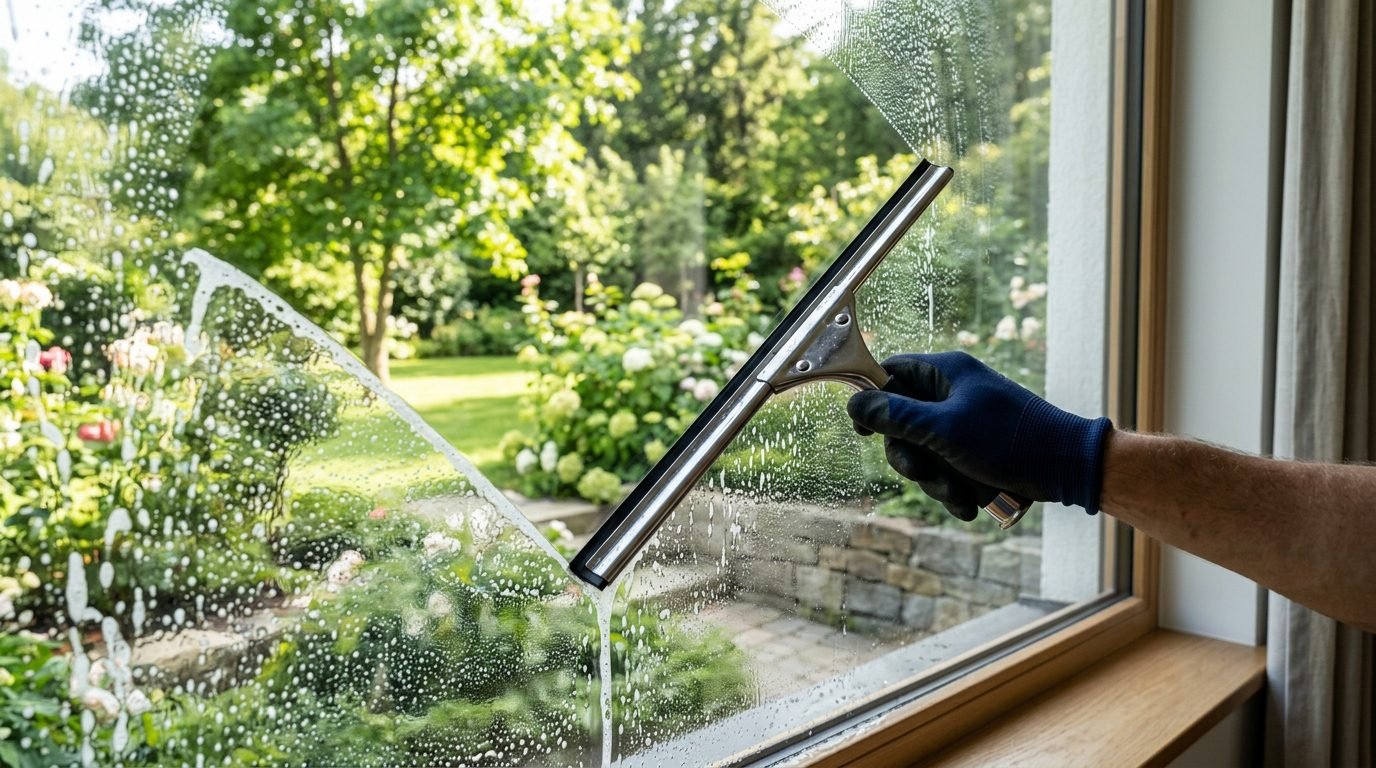
Step-by-Step: The 4-Phase Textured Glass Cleaning Protocol
Because you cannot rely on a squeegee to strip liquid off textured surfaces, cleaning requires a chemistry-first, dwell-and-agitate approach:
Phase 1: Pre-Rinse & Thermal Softening
- Turn your showerhead to hot and thoroughly spray down the glass door for 60 seconds.
- The heat expands the soap scum matrix and softens greasy body oils, preparing the surface to absorb the cleaning chemistry.
Phase 2: The Clinging Foam Dwell
Standard liquid cleaners run straight down vertical glass into the drain before they can dissolve hard water. Creating a rich clinging foam keeps the acid in direct contact with mineral deposits inside the textured dimples:
- In a foaming spray bottle, combine 1 cup of warm distilled white vinegar, 1 cup of warm water, and 1 tablespoon of original blue Dawn dish soap. (For severe hard water scale, substitute 2 tablespoons of dissolved citric acid powder).
- Shake gently to mix, then pump a thick foam blanket evenly across the entire textured door.
- Let it dwell for 10 to 15 minutes! Do not touch it yet. The acetic or citric acid chemically dissolves calcium carbonate bonds, while the dish soap emulsifies sebum oils.
Phase 3: Multi-Directional Soft-Bristle Agitation
Straight back-and-forth scrubbing only cleans two sides of a round dimple. You must use multi-directional circular motions:
- Take your soft nylon detail brush (or cordless drill with the white soft-bristle attachment running at low RPM).
- Work in small, overlapping circular patterns across a 2-foot by 2-foot section at a time. The flexible bristles bend into the recessed valleys, lifting softened scale out of the pattern without scratching the raised ridges.
- Pay special attention to the bottom 12 inches of the door and around the perimeter metal hinges where water pools. (If old caulk along the frame is discoloured, read how to remove silicone from glass without scratching).
Phase 4: Warm Rinse & Blot-Drying
- Rinse the glass thoroughly with warm shower water or a handheld spray wand, washing all suspended grime and soap foam down the drain.
- Put the squeegee away! Instead, take a clean, dry, plush waffle-weave microfiber towel.
- Blot and press the towel against the textured surface to absorb water out of the recesses, rather than dragging the cloth across the bumps. Blotting prevents friction lint from snagging on the glass texture.
Protecting & Sealing Textured Glass
Can You Apply Rain-X or EnduroShield to Textured Glass?
Yes, but application requires extra care! On smooth glass, liquid hydrophobic coatings wipe off effortlessly. On textured glass, excess liquid pools in the valleys, creating a milky, hazy buildup as it cures.
- Apply the sealant very sparingly using a microfiber applicator pad.
- Immediately buff the glass with a dry, lint-free microfiber cloth using circular pressure to ensure no liquid puddles in the recesses.
- See our detailed head-to-head longevity analysis in EnduroShield vs. Rain-X shower door coatings.
What if Mineral Etching Has Already Occurred?
If the glass remains cloudy even after deep cleaning with vinegar and brush agitation, minerals have chemically etched into the glass matrix. Learn how to distinguish surface scale from permanent etching with the fingernail test in our guide on how to remove etched hard water spots from glass. (For acid-etched or frosted window privacy films, see how to clean frosted glass windows).
Frequently Asked Questions
Can I use Bar Keepers Friend on textured glass shower doors?
Yes, but use the liquid MORE spray or soft cleanser, not the dry abrasive powder! The liquid formula uses oxalic acid to dissolve tough mineral stains without mineral grit that could pack into the texture. Always rinse completely within 2 minutes so oxalic acid does not etch surrounding aluminum frame hinges.
Which side of a textured glass shower door should face inside?
In proper architectural installations, the smooth side of the glass should face the inside of the shower, while the textured, patterned side faces outward toward the dry bathroom. This design allows daily squeegeeing on the wet interior face while displaying the texture visually on the exterior. If your door was installed backward with texture on the wet side, using the foaming brush protocol outlined above is the only effective cleaning method.
How do I keep textured shower doors clean daily without a squeegee?
Because squeegees do not work on textured faces, the easiest daily maintenance habit is keeping a plush microfiber waffle-weave cloth hung on a towel hook. After your final shower rinse, spend 30 seconds pressing the towel against the wet glass to blot standing water droplets out of the recesses before they evaporate into mineral spots.
Pingback: How to Remove Hard Water Stains from Shower Glass Without Scrubbing
Pingback: How to Clean Frosted Glass Shower Doors with Heavy Limescale