⚡ Direct Answer: How to Clean Tinted Windows Without Damaging Them?
To clean tinted windows safely without bubbling, hazing, or peeling, always use an ammonia-free cleaner (such as distilled water mixed with 2 drops of mild baby shampoo or Castile soap) and clean, plush microfiber towels. Never use standard blue Windex, harsh acids on exposed film, abrasive paper towels, or razor blades. Remember: aftermarket solar and privacy film is installed strictly on the interior glass surface, meaning exterior mineral spots can be cleaned normally on the bare glass.
Whether you paid $400 to tint your vehicle’s windows or invested thousands installing solar control UV film on your home’s south-facing picture windows, tinted glass requires completely different care than bare glass.
One innocent mistake—like grabbing a bottle of standard blue window cleaner or scrubbing with coarse paper towels—can trigger an irreversible chemical reaction. Within days, your sleek charcoal tint turns purplish, hazes over with microscopic scratches, or develops ugly blisters and peeling edges that cost hundreds of dollars to strip and replace.
As a home wellness specialist and glass care advocate, I want to keep your views crystal clear while protecting your investment from costly damage. Here is the definitive, science-backed guide on how to clean tinted windows without damaging them, whether you are dealing with architectural home windows or automotive ceramic tint.
The Science of Tint: Why Common Cleaners Destroy Film
⚠️ Tree Sap on Tinted Glass Warning
Never use metal razors or acetone to remove sap from tinted windows. Discover safe plastic razor blade and isopropyl alcohol protocols in our guide on how to remove tree sap from window glass without scratching.
To understand what damages tinted windows, you have to look at what window tint actually is. Unlike bare architectural glass (which is hardened, chemical-resistant silica), window tint is a multi-layered sandwich of polyethylene terephthalate (PET) polyester film, UV inhibitors, dyed or ceramic nanoparticles, and mounting adhesive.
Here are the three primary hazards that ruin window film:
- Ammonia (The #1 Tint Killer): Standard commercial glass cleaners (like traditional Windex) rely on ammonia to cut grease. Ammonia chemically reacts with the mounting adhesive and leaches dyed pigment out of the polyester. It causes the film to turn purple, turn brittle, and detach from the glass in bubbles.
- Paper Towels & Coarse Rags: Paper towels are made from wood pulp. Under a microscope, paper fibers act like fine sandpaper against soft polyester film, leaving thousands of microscopic swirl scratches that create blinding glare in direct sunlight.
- Razor Blades & Scrapers: While razor blades are standard tools for removing paint on bare glass (as detailed in our guide on safely removing stickers from new windows), a metal razor blade will slice, gouge, and tear window tint film instantly.
🔍 The Inside vs. Outside Rule (Where Is Your Tint?):
Here is the secret that relieves 90% of homeowner anxiety: Aftermarket window tint film is almost always installed on the INTERIOR surface of the glass! The exterior face facing the street or yard is bare, durable silica. If your exterior windows have hard water spots from lawn sprinklers or bird droppings, you can clean the exterior normally—you only need to use ultra-gentle tint protocols on the inside!
Factory Privacy Glass vs. Aftermarket Tint Film
Before mixing your cleaner, determine whether your glass has factory-pigmented glass or applied film:
- Factory Privacy Glass (Dyed Glass): Common on the rear windows of SUVs, minivans, and certain architectural privacy windows. The dark tint is an electrical pigment baked into the molten glass itself during manufacturing. There is no applied plastic film. It cannot peel, bubble, or scratch off. You can clean factory privacy glass just like regular glass (though ammonia-free cleaners are still recommended to protect surrounding rubber seals).
- Aftermarket Tint Film (Solar & Ceramic): A flexible polyester membrane bonded to the inside glass surface with adhesive. You can feel a slight lip along the top or side edge with your fingernail. This film requires strict tint-safe cleaning methods.
The Safe Tint-Cleaning Arsenal (Toolkit Checklist)
Need to peel registration stickers or residue off tinted glass without slicing the film? Review the top tested tools in our guide to the best plastic razor blade scrapers for glass windows and tint.
Gather these gentle, non-abrasive supplies before cleaning:
🛠️ Tint-Safe Cleaning Kit Checklist
- Plush Microfiber Detailing Towels (350+ GSM): Long, soft split-microfiber fibers trap dust particles without scratching soft polyester film.
- Waffle-Weave Glass Microfiber Cloth: For the final drying pass to leave a 100% streak-free, lint-free shine.
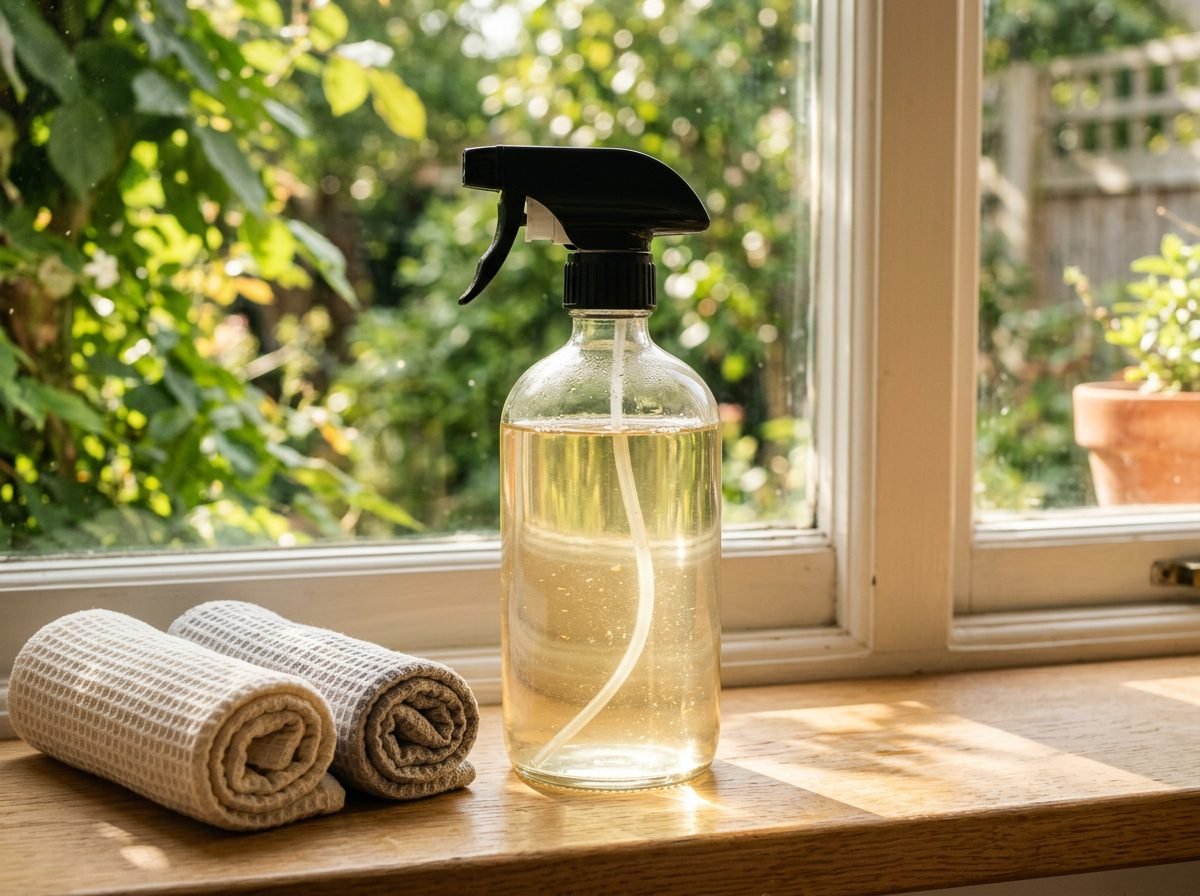
- Rashmi’s Gentle DIY Tint Wash: 16 oz distilled water + 3 drops unscented baby shampoo or mild Castile soap. (Distilled water is critical to prevent mineral spotting).
- Commercial Tint-Safe Spray (Alternative): An ammonia-free formula such as Invisible Glass Ammonia-Free Glass Cleaner or Chemical Guys Streak-Free Tint Safe Cleaner.
- Soft Silicone Squeegee: A silicone-blade squeegee (never hard rubber with metal brackets) to pull excess liquid cleanly.
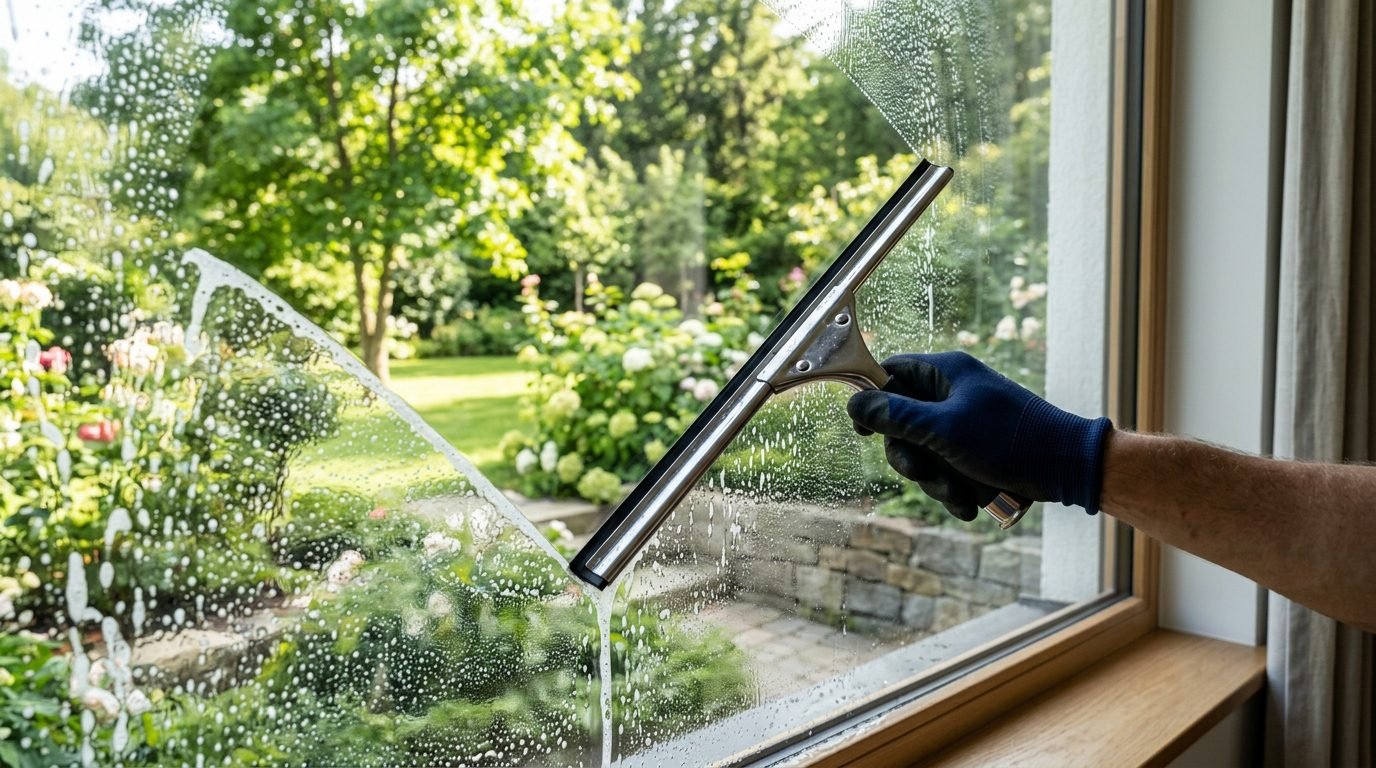
Step-by-Step: The 4-Phase Tint-Safe Cleaning Protocol
Follow these four sequential steps to achieve a crystal-clear, showroom shine without risking film damage:
Phase 1: Never Dry Wipe (The Lubrication Rule)
Wiping a dry, dusty tinted window with a dry cloth—even microfiber—will drag abrasive airborne grit across the polyester film, leaving micro-scratches. Always mist your cleaning solution liberally across the glass first to provide a protective liquid lubricant between the towel and the film.
Phase 2: The Two-Towel Microfiber Method
- Spray your ammonia-free cleaner or DIY baby shampoo solution evenly across the tinted window.
- Fold a plush microfiber towel into quarters.
- Gently wipe the glass in smooth, overlapping horizontal S-patterns from the top of the window to the bottom. Let the microfiber nap lift the oils and fingerprints—do not apply heavy scrubbing pressure.
Phase 3: Mind the Perimeter Edges (Prevent Peeling)
When cleaning near the edges where the film meets the window frame or weatherstripping, always wipe parallel to the edge or inward toward the center of the pane. Never drag a rag outward toward the corner, as the towel fibers can snag on the microscopic film edge and break the adhesive seal, creating permanent peeling corners.
Phase 4: The Final Streak-Free Buff
Immediately take your second, bone-dry waffle-weave microfiber cloth and gently buff the pane in light circular motions to remove residual moisture before it can evaporate into faint water spots. (If you have tilt-in double-hung windows, follow our guide on cleaning double hung windows from the inside to position sashes comfortably while wiping).
What About Hard Water Spots on Tinted Windows?
Dealing with heavy sprinkler mineral crusts or acid rain etching on your vehicle? Follow our specialized automotive restoration guide in how to remove hard water stains from tinted car windows.
One of the most frequent panic questions we receive from readers is: “My lawn sprinkler sprayed hard water all over my tinted windows, and vinegar dissolves tint! How do I clean them?”
Here is the crucial reality: The hard water stains are on the OUTSIDE of your window, while the tint film is on the INSIDE!
- Cleaning the Exterior (Safe for Acids): Because the exterior glass is bare silica, you can safely use our proven 50/50 distilled water and white vinegar soak, or follow our master guide on removing stubborn hard water stains from glass. The exterior bare glass will not be harmed by mild acids.
- If Hard Water Is on the Interior Film: If high indoor condensation pooled on interior tint and left chalky mineral spots (see how to stop condensation in winter), do not use vinegar. Acetic acid can dull the polyester topcoat. Instead, moisten a microfiber cloth with distilled water and a drop of Castile soap, gently dwell on the mineral ring, and wipe dry. For severe etched damage, consult our analysis on etched hard water spots on glass.
Comparison: Safe vs. Hazardous Cleaners for Tinted Glass
| Cleaning Agent / Tool | Primary Risk to Tint | Safe on Interior Film? | Safe Alternative |
|---|---|---|---|
| Ammonia Cleaners (Windex) | Dissolves adhesive, causes purple tint and blistering | ❌ Strictly Prohibited | Invisible Glass Ammonia-Free |
| Paper Towels / Newspaper | Coarse wood fibers cause micro-swirl scratches | ❌ Never Use | Split Microfiber Cloth (350+ GSM) |
| Razor Blades & Scrapers | Slices, tears, and gouges polyester film | ❌ Ruinous | Plastic scraper or fingernail wrapped in cloth |
| Distilled Water + Baby Soap | None (Zero caustic chemicals or minerals) | ✅ 100% Safe (Recommended) | Rashmi’s DIY Tint Formula |
| Vinegar (Undiluted Acid) | Can haze delicate polyester topcoats over time | ⚠️ Use with Extreme Caution | Use only on exterior bare glass |
Frequently Asked Questions (FAQ)
How long after installing new window tint should I wait before cleaning?
Wait at least 30 days before cleaning newly installed window tint! Tint requires several weeks to fully cure and evaporate microscopic moisture pockets trapped between the film and glass. Cleaning or rolling down windows too soon can dislodge the adhesive bond.
Can I use rubbing alcohol on tinted windows?
Yes, in moderate dilutions. A mixture containing 1 part 70% isopropyl alcohol to 10 parts distilled water is safe for tinted windows and helps remove sticky hand oils or vape residue without harming film adhesives.
Why did my tinted window turn purple?
Purple tint is a telltale sign of dye breakdown caused by solar UV radiation combined with exposure to ammonia-based cleaners. Once the dyes degrade, the color change cannot be reversed; the old film must be steamed off and replaced with modern non-metallic ceramic or carbon film.
Can I use a squeegee on tinted glass?
Only if the squeegee has a flexible silicone or soft rubber blade with no exposed metal screws or brass channels that could make contact with the film. For interior panes, high-grade microfiber towels are generally much safer and easier to control (see our squeegee vs window vacuum comparison).
Summary: Effortless Clarity Without the Risk
Protecting your home and vehicle window tint comes down to three golden rules: avoid ammonia, ditch the paper towels, and wipe with plush microfiber. By sticking to gentle distilled water with a few drops of baby shampoo, you will preserve your tint’s heat-blocking power, optical clarity, and factory finish for years to come.
Pingback: How to Remove Hard Water Stains from Shower Glass Without Scrubbing
Pingback: How to Remove Silicone from Glass Without Scratching
Pingback: How to Safely Remove Paint and Stickers from New Windows (Zero Scratches!)
Pingback: How to Remove Hard Water Stains from Tinted Car Windows