⚡ Direct Answer: How to Remove Silicone from Glass Without Scratching?
To remove silicone from glass without scratching: 1) Soften the cured silicone caulk by saturating it with mineral spirits, denatured alcohol, or a citrus-based silicone remover for 10 to 15 minutes. 2) Mist the surrounding glass with soapy water to create a lubricating barrier. 3) Slice off the thick bulk bead using a double-edged plastic razor blade (or a fresh stainless steel razor held flat at a 30-degree angle). Never scrape dry glass or pull blades backward. 4) Dissolve the remaining microscopic silicone smear by wiping firmly with a microfiber cloth soaked in 90%+ isopropyl alcohol until the glass is squeaky clean.
Whether you just installed a frameless glass shower enclosure, replaced an old window pane, or completed a weekend bathroom caulking project, you have probably run into one of the most stubborn post-renovation headaches: cured silicone caulk smeared across the glass.
Silicone is engineered specifically to be elastic, waterproof, and permanently adhesive. Unlike latex caulk or dried paint (which can often be chipped away with a fingernail), cured silicone forms covalent siloxane bonds with the silica in glass. When homeowners try to scrape it off in a rush using old utility knives or abrasive scouring pads, the result is almost always disastrous—deep, permanent scratches etched into expensive tempered glass.
The secret to removing silicone cleanly is combining chemical softening with lubricated mechanical separation. Here is our master guide on how to remove silicone from glass without scratching, protecting tempered shower enclosures, tinted films, and residential window glass.
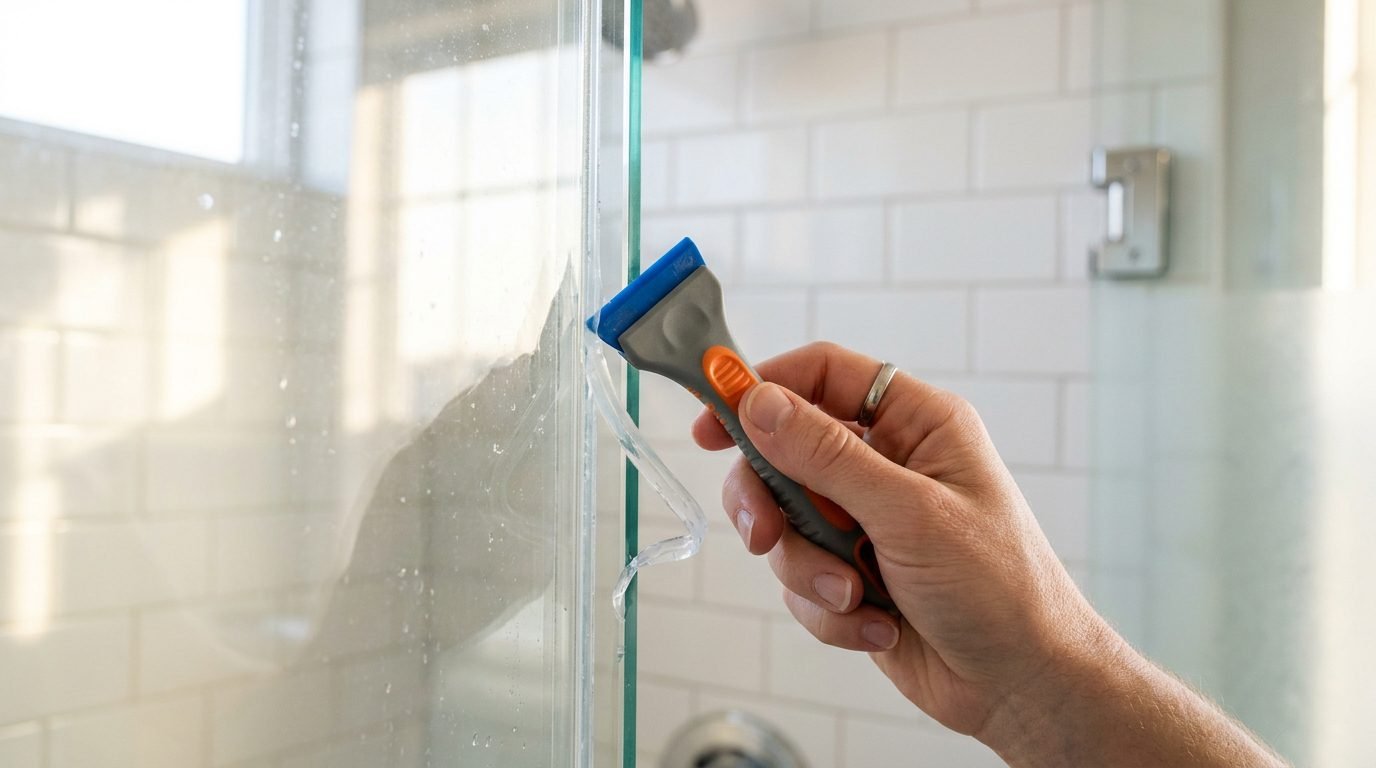
Why Metal Razor Blades Scratch Tempered Glass
Safely shaving softened silicone caulk off delicate glass? Discover the top professional tools in our guide to the best plastic razor blade scrapers for glass windows and tint.
Many online tutorials casually recommend grabbing a single-edge utility razor blade and scraping the silicone away dry. While this can work on standard annealed window glass, it is extraordinarily risky on modern **tempered safety glass** (the type required by building codes for all shower doors, sliding patio doors, and low-level windows):
- Microscopic “Fab Fines”: During the heat-treating tempering process, microscopic glass dust particles (called “fabricating debris” or “fab fines”) fuse to the glass surface. When a metal razor blade slides over these tiny imperfections, the blade breaks them loose, drags them across the pane, and scratches deep white gouges into the glass.
- Rusted or Nicked Blades: A microscopic burr or rust spot on a metal razor acts like a diamond-tipped glass cutter.
- The Solution: Professional glass restorers use **double-edged plastic razor blades** made from high-strength polycarbonate. They have a sharp enough edge to slice softened silicone cleanly off the silica matrix, but the polymer is physically softer than glass, making it virtually impossible to scratch the surface!
⚠️ Golden Rule: Never Scrape Dry Glass!
Regardless of whether you use plastic or stainless steel blades, never scrape dry glass. Always apply a lubricating fluid buffer (soapy water or mineral spirits). The liquid lifts microscopic debris and provides hydrodynamic glide so the blade floats over the glass surface.
🛠️ Tools & Materials Checklist
🌿 Tackling Organic Tree Resin on Glass?
Just like silicone, hardened tree sap should never be scraped dry. Learn how to use alcohol dwell times and plastic razor blades in our guide on removing tree sap from window glass safely.
- Double-Edged Plastic Razor Scraper: Safe for all glass, including tempered shower doors and automotive glass.
- Mineral Spirits or Denatured Alcohol: The safest, most effective solvents for breaking down cured silicone polymers.
- 90%+ Isopropyl Alcohol (Rubbing Alcohol): Essential for erasing the final invisible silicone oil haze.
- Spray Bottle with Soapy Water: 1 teaspoon of gentle dish soap mixed with 1 quart of warm water.
- Lint-Free Microfiber Cloths: For wiping and buffing without leaving lint in the adhesive residue.
- Rubber Gloves & Protective Eyewear: For safe solvent handling.
Foshio Double-Edged Plastic Razor Blade Scraper Kit
Rigid composite plastic blades designed specifically to peel caulk, stickers, and silicone off tempered glass and tinted windows without scratching.
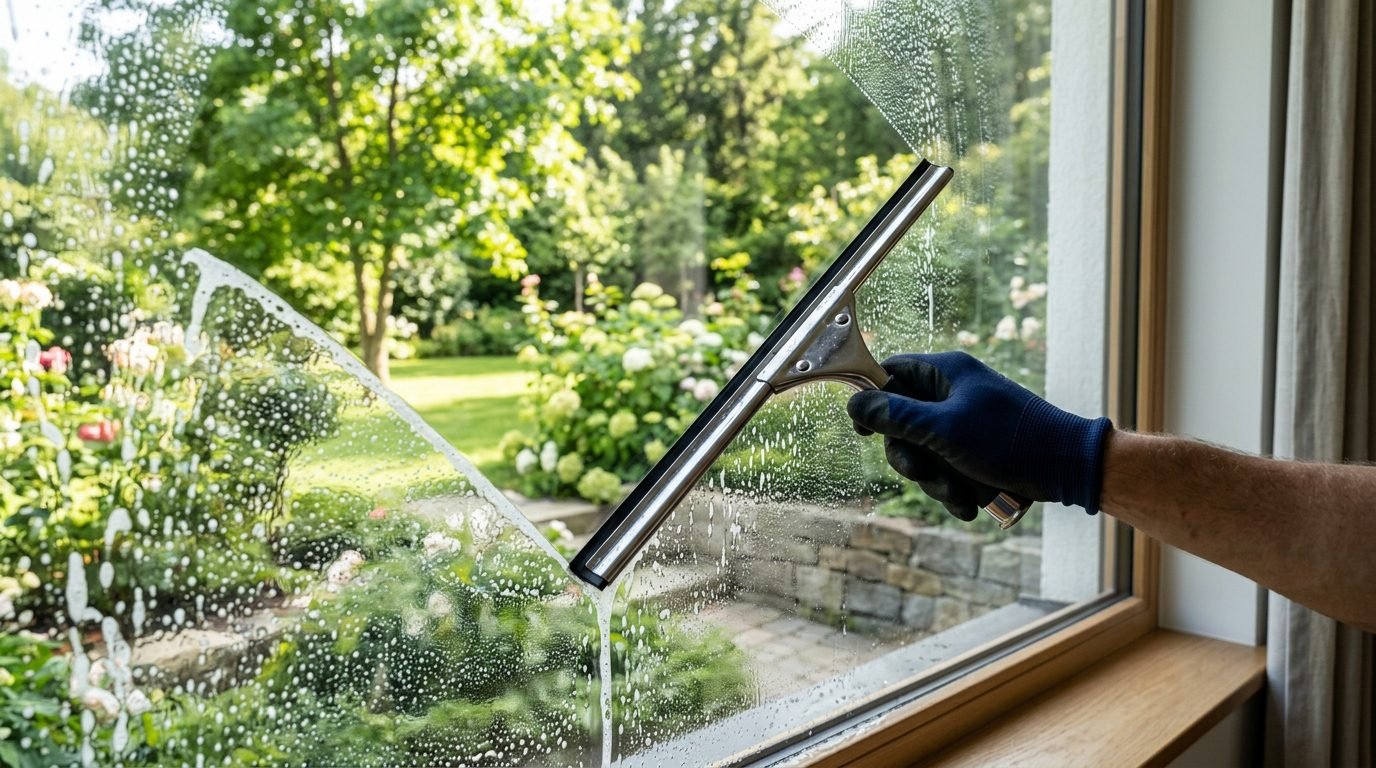
Step-by-Step: The 4-Phase Silicone Removal Protocol
Follow these four sequential phases to safely strip thick caulk beads and eliminate the residual greasy ghost film:
Phase 1: Chemical Softening (Breaking the Bonds)
Attempting to peel cold, cured silicone requires immense physical force. Softening it first turns the rubbery polymer into a soft, jelly-like consistency:
- Soak a clean cotton rag or paper towel with mineral spirits or denatured alcohol.
- Press the saturated rag firmly over the silicone bead. For vertical shower doors, tape the rag in place with painter’s tape to hold moisture against the glass.
- Allow the solvent to dwell for 10 to 15 minutes. The solvent swells the siloxane matrix, loosening its microscopic grip on the glass.
Phase 2: Slicing Away the Bulk Bead
- Liberally mist the glass around the softened caulk with your soapy water lubricating spray.
- Hold your plastic razor scraper at a shallow 30-degree angle against the glass pane.
- Push forward with smooth, steady pressure to slice underneath the thick bead. Because the silicone is softened, it will peel off in long rubbery ribbons.
- Crucial Blade Rule: Always push forward in one direction. Never pull the scraper backward, as dragging the blade in reverse can trap loosened debris beneath the edge.
Phase 3: Removing the Thin Stubborn Film
Once the thick bead is gone, you will see a thin, translucent layer of silicone still welded to the surface:
- Apply a second light mist of mineral spirits directly onto the remaining residue.
- Using a fresh plastic blade, make short, overlapping scraping passes across the film at a 30-degree angle.
- Wipe the scraped sludge away with a dry paper towel before it can re-cure.
Phase 4: Eradicating the Oily Silicone “Ghost Haze”
If you have ever removed silicone, you know the frustrating “ghost smear”—the glass looks clear until moisture or light hits it, revealing a greasy smudge that resists standard glass cleaners. Ordinary glass sprays cannot dissolve silicone oils.
- Soak a clean, dry microfiber cloth with high-percentage (90%+) isopropyl alcohol.
- Vigorously rub the area in firm, circular buffing motions. Isopropyl alcohol acts as a targeted degreaser that strips the microscopic siloxane oil molecules off the silica pores.
- Flip to a dry, clean section of the cloth and buff the glass dry until it squeaks.
- Test the spot by breathing hot air onto the glass: if the condensation fogs evenly with no water-repelling patches, 100% of the silicone is gone! (If you plan to apply a protective coating afterward, see our complete guide on EnduroShield vs Rain-X shower door coatings).
Special Situations & Edge Cases
What if the Glass Has Aftermarket Window Tint?
Metal razor blades are 100% forbidden on tinted glass! Razor blades will instantly slice the thin polyester film, causing tears and bubbles. You must use plastic razor blades and denatured alcohol (never use ammonia or harsh citrus solvents on tint). Read our complete safety protocol in how to clean tinted windows without damaging them.
What if Old Silicone Trapped Hard Water Stains Underneath?
When stripping old caulk from shower enclosures, you will often find dark mineral crusting or hard water scale trapped under the joint. Once the silicone is stripped, treat the underlying mineral deposits using our acid-dwell method in how to remove stubborn hard water stains from shower glass.
What if the Window Frame Was Also Painted Shut?
During window replacement or remodeling, painters frequently smear both paint and silicone along the sash stops. If your window sash is stuck tight, follow our gentle scoring method in how to unstick windows painted shut without breaking glass.
Frequently Asked Questions
Does vinegar dissolve cured silicone on glass?
While uncured silicone smells like vinegar because it releases acetic acid during curing, distilled white vinegar will not dissolve fully cured silicone. The cured siloxane chemical bonds are highly resistant to mild acids. You must use mineral spirits, denatured alcohol, or dedicated commercial silicone digesters to break the bonds.
Can I use a heat gun or hair dryer to remove silicone?
Heat softens silicone, but using a high-temperature heat gun on glass is extremely dangerous. Uneven localized heating creates intense thermal stress that can shatter large glass panes or explode tempered shower doors. If you use heat, use only a standard hair dryer on medium setting held at least 6 inches away from the glass.
Can I use acetone to clean silicone off glass?
Acetone softens silicone slightly, but it evaporates too quickly to dissolve thick beads effectively. More importantly, acetone will instantly melt and discolour adjacent plastic trim, acrylic shower pans, vinyl window frames, and painted surfaces. Mineral spirits or denatured alcohol are far safer for surrounding fixtures.
Pingback: EnduroShield vs. Rain-X for Shower Doors: Which Lasts Longer? (Tested)
Pingback: How to Safely Remove Paint and Stickers from New Windows (Zero Scratches!)
Pingback: How to Clean Textured Glass Shower Doors (Without Ruining Pattern)
Pingback: How to Remove Suction Cup Marks from Glass Windows (Without Hazing) - Cleaning Curb
Pingback: How to Remove Tree Sap from Window Glass Without Scratching - Cleaning Curb