⚡ Direct Answer: How to Clean Frosted Glass Windows Streak-Free?
To clean frosted or acid-etched glass windows without streaks or permanent scratches, never use rubber squeegees, paper towels, or abrasive green scouring pads. Spray the textured surface generously with a 50/50 mixture of warm distilled water and white vinegar, agitate the microscopic pits using a soft-bristled horsehair or nylon detail brush in gentle circular motions, and blot dry with a lint-free waffle-weave microfiber cloth. For stubborn body oils, greasy fingerprints, or calcium soap scum, apply a gentle slurry of baking soda and warm water, let dwell for 2 minutes, and wipe clean with pure distilled water.
Frosted glass is one of the most elegant architectural features in modern homes. Whether installed as bathroom privacy windows, pantry doors, decorative entry transoms, or frameless shower screens, it diffuses gorgeous natural daylight while shielding your family from prying eyes.
However, the moment frosted glass gets dirty, homeowners realize it behaves completely differently from standard window glass. Traditional glass cleaners like Windex leave cloudy white smears, rubber squeegee blades chatter and skip across the rough surface, and paper towels shred into millions of microscopic lint specks that weld themselves into the textured valleys.
Even worse, well-meaning cleaners often reach for abrasive scouring pads or harsh powdered cleansers, accidentally grinding away the delicate acid-etched texture and creating shiny, transparent “bald spots” that ruin the privacy finish forever. Here is our professional, chemical-free guide on how to clean frosted glass windows, dissolve deeply embedded skin oils, and restore flawless velvety opacity without scratching.

The Science of Frosted Glass: Why It Stains So Easily
To understand why standard cleaning methods fail miserably on frosted glass, you have to look at how it is manufactured:
- Microscopic Peaks & Valleys: Standard window glass is fire-polished, creating an ultra-smooth, non-porous molecular surface. Frosted glass, however, is created by either acid-etching (treating clear float glass with hydrofluoric acid) or sandblasting (bombarding glass with high-pressure aluminum oxide grit).
- The “Lint Trap” Effect: This manufacturing process carves millions of microscopic craters, pits, and ridges into the glass. When you wipe paper towels or cotton terry cloths across the textured surface, the microscopic sharp glass ridges act like thousands of miniature cheese graters, shaving off paper fibers and trapping lint inside the pores.
- The Oil Trap Dilemma: Natural sebum from human fingerprints, cooking grease from nearby kitchens, and bathroom soap scum penetrate deep into these micro-valleys. Because light scatters differently through oil than through air, oily spots make frosted glass appear semi-transparent and permanently greasy.
⚠️ The 3 Fatal Mistakes That Permanently Ruin Frosted Glass
- 1. Rubber Squeegees: Squeegee blades require a mirror-flat plane to create a hydraulic seal. On frosted glass, the rubber bounces across the microscopic peaks, leaving dirty dirty-water puddles in the valleys that dry into severe mineral streaks.
- 2. Green Scotch-Brite / Magic Erasers: Melamine foam and green nylon scouring pads contain microscopic abrasive particles (Mohs hardness 4–7) that physically abrade the delicate acid-etched finish, polishing down the microscopic peaks and leaving permanent clear streaks that cannot be fixed.
- 3. Ammonia-Heavy Blue Sprays: Commercial ammonia formulas evaporate rapidly and leave surfactant residues behind that oxidize and turn yellow inside the frosted pores over time.
Safe vs. Destructive Cleaners for Frosted Glass
Dealing with heavy calcium crusts and hard water minerals on bathroom privacy glass? Check out our dedicated guide on how to clean frosted glass shower doors with heavy limescale.
| Cleaning Tool / Chemical | Safety Rating | What It Does to Frosted Glass |
|---|---|---|
| Distilled Vinegar + Warm Water | Safe (Best Choice) | Dissolves mineral scale and evaporates 100% residue-free. |
| Baking Soda Slurry | Safe (Mohs 2.5) | Emulsifies body oils without scratching (glass hardness is 5.5). |
| Soft Horsehair / Detail Brush | Safe (Essential Tool) | Bristles reach inside microscopic valleys without abrading. |
| Waffle-Weave Microfiber | Safe (100% Lint-Free) | Absorbs suspended grime without shedding paper fibers. |
| Green Scouring Pads / Comet | Destructive | Grinds away etching, creating permanent transparent bald patches. |
| Paper Towels / Newspapers | High Frustration | Leaves thousands of clinging white lint shreds embedded in glass. |
| Rubber Squeegee Blades | Ineffective | Skips, chatters, and leaves dirty puddles in micro-craters. |
Step-by-Step: The 4-Phase Frosted Glass Restoration Protocol
Follow this foolproof, 4-phase protocol to lift grime from the microscopic valleys of frosted glass without leaving a single streak or scratch:
Phase 1: Dry Pre-Dusting (Never Spray First!)
Spraying liquid onto dry, dusty frosted glass turns surface dust into abrasive liquid sludge that gets forced deeper into the etched pores. Always begin with a dry clean:
- Take a clean, dry, high-pile microfiber duster or a soft horsehair paintbrush.
- Gently sweep the entire frosted surface from top to bottom to lift loose dust, hair, and cobwebs.
- Vacuum the bottom window sill and track channel to prevent debris from washing down during cleaning (see our master guide on how to clean window tracks and remove stubborn gunk).
Phase 2: The Acetic Acid Mist & Bristle Agitation
Now that loose dust is gone, apply the acid dwell to dissolve alkaline water minerals:
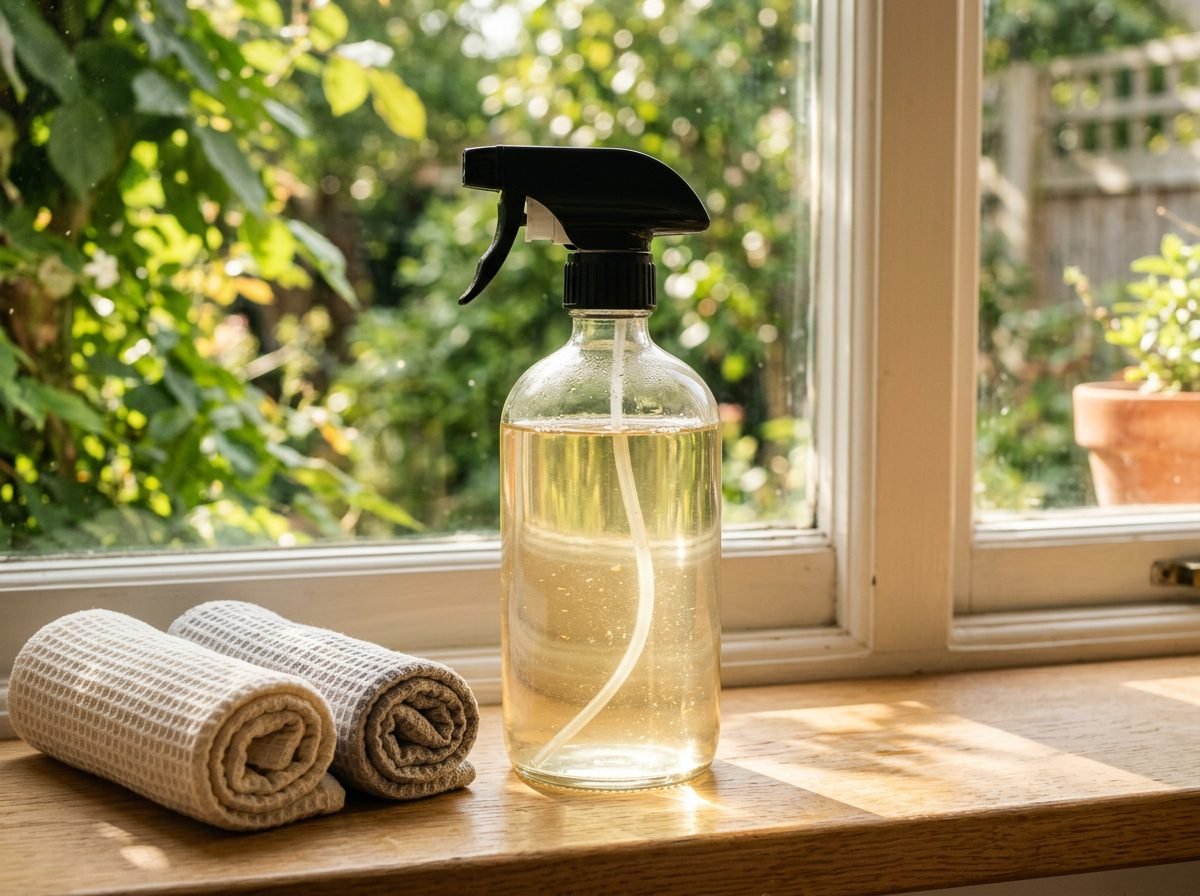
- Mix equal parts warm distilled water and distilled white vinegar (5% acidity) in a clean spray bottle. (Add 1 drop of gentle Dawn dish soap for surfactant lift, as perfected in our Dawn and vinegar window cleaning formula).
- Mist the frosted glass evenly from top to bottom. Allow the solution to sit for 2 to 3 minutes to penetrate the microscopic craters.
- Take a soft-bristled nylon or natural horsehair detail brush and gently scrub the glass in tight, overlapping circular motions. The flexible bristle tips penetrate directly into the micro-valleys where flat squeegees cannot reach.
Phase 3: The Baking Soda Slurry for Stubborn Fingerprints & Soap Scum
If your frosted window has dark, greasy handprints around the lock latch, or heavy calcium soap scum in a bathroom shower enclosure:
- In a small bowl, mix 2 tablespoons of baking soda (sodium bicarbonate) with just enough warm water to form a smooth paste the consistency of pancake batter.
- Dab the slurry directly onto greasy fingerprints or mineral rings using your fingers or a soft microfiber cloth.
- Gently buff in light circles for 30 to 45 seconds. Baking soda has a Mohs hardness of 2.5 (compared to glass at 5.5), meaning it is physically impossible for baking soda to scratch the glass, yet it naturally emulsifies grease and neutralizes odors!
- If dealing with severe historic calcium scale on bathroom glass, pair this with our deep restoration method in how to remove stubborn hard water stains from shower glass.
Ultra-Soft Boar & Horsehair Cleaning Detail Brushes
Natural ultra-soft bristles that safely reach into frosted glass microscopic pores without scratching delicate acid etching.
Phase 4: Distilled Water Rinse & Microfiber Waffle Buff
The final rinse and dry is where most people get streaks. Tap water contains dissolved calcium and magnesium that dry into white chalky rings inside the frosted glass pores:
- Fill a second clean spray bottle with 100% pure distilled water.
- Mist the entire pane generously to rinse away lifted vinegar, soap, and dissolved minerals.
- Take a clean, dry waffle-weave microfiber cloth. Instead of wiping back and forth with excessive friction, press and blot the cloth against the glass to wick moisture out of the microscopic valleys.
- Allow the glass to air-dry for 60 seconds. The uniform, velvety, translucent matte finish will return completely streak-free!
Pro Tips: Which Side of Your Window is Actually Frosted?
Most insulated double-glazed frosted windows have one smooth side and one textured side. Knowing which side is which saves you substantial time:
The 5-Second Scratch Test
- The Fingernail Test: Gently run your fingernail across both sides of the glass pane. The side that glides silently like ice is standard float glass (clean it normally with a squeegee!). The side that creates a quiet “zipper” sound and feels like fine sandpaper is the acid-etched frosted side.
- Double-Glazed Units (IGUs): In premium double-pane privacy windows, manufacturers often seal the frosted side on the inside of the sealed air cavity (Surface 2 or 3). If both room-facing surfaces feel completely smooth, your frosting is permanently protected inside the glass unit! You can clean both outer faces using regular window cleaning tools and squeegees. (If moisture or fog ever develops between those panes, read our diagnostic on how to fix foggy double-pane glass and broken seals).
- Shower Doors: Frameless frosted shower doors almost always place the smooth glass surface facing inward toward the shower spray, and the textured frosted surface facing outward toward the bathroom room. (To protect shower glass long-term, benchmark hydrophobic sealants in our guide on EnduroShield vs. Rain-X for shower doors).
Frequently Asked Questions (FAQ)
Can you use regular Windex on frosted glass?
You can, but it is not recommended. Windex contains blue synthetic dyes and ammonia surfactants that evaporate too quickly in the microscopic pits of frosted glass, leaving behind a cloudy, streaky haze. Plain distilled white vinegar diluted in distilled water produces far cleaner, streak-free results.
How do you remove stubborn grease or sticker residue from frosted glass?
Apply a small splash of isopropyl alcohol (rubbing alcohol 70% or 90%) directly to a microfiber cloth and dab the greasy mark. Alcohol instantly dissolves organic fats and adhesive resins without leaving any soapy residue. For dried construction adhesives, follow our gentle protocol in how to safely remove paint and stickers from new windows.
Can I use a Magic Eraser (melamine sponge) on frosted glass?
No! Although melamine sponges feel soft, their microscopic structure is hard as glass (like fine 3,000-grit sandpaper). Scrubbing frosted glass with a Magic Eraser will polish down the textured microscopic peaks, permanently leaving shiny, translucent bald spots on your privacy window.
Why does my frosted glass look clear when it gets wet?
This is a natural optical phenomenon! Frosted glass diffuses light because light scatters across the air-glass micro-ridges. When water fills those micro-valleys, the refractive index of water matches the glass, allowing light to pass straight through. As soon as the water dries or evaporates, the full opaque frosting returns completely.
Summary: Pristine Opacity in 10 Minutes
Frosted glass windows do not require expensive specialty chemical restorers or aggressive scrubbing. By ditching shedding paper towels and rubber squeegees in favor of diluted distilled vinegar, a soft natural-bristle detail brush, and waffle-weave microfiber blotting, you can maintain velvety, streak-free privacy and radiant natural sunlight throughout your home.
Pingback: Foggy Glass Windows: What Condensation Means & Safe Fixes
Pingback: How to Clean Textured Glass Shower Doors (Without Ruining Pattern)
Pingback: EnduroShield vs. Rain-X for Shower Doors: Which Lasts Longer? (Tested)
Pingback: How to Remove Hard Water Stains from Shower Glass Without Scrubbing
Pingback: How to Clean Frosted Glass Shower Doors with Heavy Limescale